

Got a window quote?
Upload it and we'll check the price against city wage data and flag missing scope items. Free, no email.
Average Window Cost by Frame Material (2026)
The single biggest pricing lever on a window quote is frame material. The table below shows installed cost per window for the most common residential frame types, plus a typical 10-window home total and what each material is best for.
| Frame Material | Per Window (Installed) | 10-Window Home Total | Best For |
|---|---|---|---|
| Vinyl (entry-level) | $400-$600 | $4,000-$6,000 | Budget projects, rentals, like-for-like swaps |
| Vinyl (premium) | $600-$900 | $6,000-$9,000 | Color options, foam-filled frames, longer warranty |
| Aluminum | $500-$900 | $5,000-$9,000 | Commercial-look, large openings, dry climates |
| Composite (Fibrex) | $700-$1,400 | $7,000-$14,000 | Wood look without the maintenance, Andersen 100 series |
| Fiberglass | $700-$1,200 | $7,000-$12,000 | Long-term durability, extreme climates |
| Wood-clad (interior wood, exterior clad) | $900-$1,600 | $9,000-$16,000 | Premium homes, real-wood interior with low-maintenance exterior |
| Solid wood | $1,000-$1,800 | $10,000-$18,000 | Historic homes, restoration, stain-grade interiors |
Prices include the window unit, double-pane low-E glass with argon fill, standard insert installation, screens, and basic interior trim. Add 15-25% for full-frame replacement, 10-20% for triple-pane glass, and $300-$800 for lead paint testing on pre-1978 homes.
Window Replacement Cost by Window Count
Window pricing is largely linear (cost per window), so the count is the next biggest variable after frame material. Below are typical total costs for the three most common frame materials at standard residential window counts.
| Window Count | Vinyl | Fiberglass | Wood-clad |
|---|---|---|---|
| 5 windows (small home, partial replace) | $2,000-$4,000 | $3,500-$6,000 | $4,500-$8,000 |
| 10 windows (typical 1,500-2,000 sq ft home) | $4,000-$8,000 | $7,000-$12,000 | $9,000-$16,000 |
| 15 windows (typical 2,000-2,800 sq ft home) | $6,000-$12,000 | $10,500-$18,000 | $13,500-$24,000 |
| 20 windows (large home) | $8,000-$16,000 | $14,000-$24,000 | $18,000-$32,000 |
| 25 windows (very large home) | $10,000-$20,000 | $17,500-$30,000 | $22,500-$40,000 |
Vinyl Window Cost: Entry-Level vs. Premium
Vinyl is by far the most popular replacement window material in the U.S., installed in roughly 70% of replacement projects. The pricing range is wide because the quality range is wide.
- Entry-level vinyl ($400-$600 installed): Window World, Champion entry tier, Pella 250 series. White or beige only, single chambers, basic hardware. 15-20 year lifespan in moderate climates. Fine for rentals or short-stay homes.
- Mid-range vinyl ($600-$900 installed): Pella 350-450, Andersen 100 (technically Fibrex composite), Milgard, Simonton. More chambers, foam-filled frames, exterior color options, better hardware. 25-30 year lifespan.
- Premium vinyl ($800-$1,100 installed): Pella 450 with upgrades, Simonton Reflections, Sunrise Restorations. Welded sashes, multi-chamber frames, marine-grade hardware. Performs close to fiberglass in most climates.
The biggest vinyl limitation is color. Dark vinyl absorbs heat, warps, and voids many warranties. If you want black or bronze frames, fiberglass or aluminum is the safer choice. Vinyl also cannot be painted reliably; whatever color you order is the color forever.
Fiberglass Window Cost: The Long-Term Winner
Fiberglass windows cost $700 to $1,200 installed per window, roughly 30 to 50% more than equivalent vinyl. The premium buys you a frame material that expands and contracts at nearly the same rate as glass, so seals last longer and the frame stays square through decades of temperature swings.
- Pella Impervia: Pella's pultruded fiberglass line. Available in many colors including dark exteriors. 30+ year lifespan typical.
- Marvin Elevate (formerly Integrity): Wood interior with Ultrex fiberglass exterior. Premium feel without solid-wood pricing.
- Marvin Essential: All-fiberglass line. Strong dark-color performance, narrow sightlines.
- Milgard Ultra: West Coast fiberglass option, often priced 10-15% below Pella Impervia.
Fiberglass is the right call in extreme climates (Phoenix, Minneapolis, Miami) and in homes you plan to keep 15+ years. In moderate climates with shorter stay horizons, the premium over vinyl rarely pays back.
Wood and Wood-Clad Window Cost
Wood windows fall into two categories with very different cost and maintenance profiles.
- Wood-clad ($900-$1,600 installed): Real wood interior, aluminum or fiberglass clad exterior. The clad exterior never needs paint; the interior can be stained or painted. The mainstream premium choice. Brands: Andersen 400, Pella Architect Series, Marvin Elevate, Marvin Signature.
- Solid wood ($1,000-$1,800 installed): Wood inside and out. Beautiful, traditional, and high-maintenance. Exterior needs repainting every 5-8 years ($200-$500 per window). Mostly used in historic restoration where building rules require it.
If you want the warmth of wood interiors but not the exterior maintenance, wood-clad is almost always the right choice. Solid wood is a restoration product, not a value product.
Composite Windows: Andersen Fibrex Explained
Composite windows are made from a mix of wood fiber and polymer. Andersen's Fibrex is the dominant composite material, used in the Andersen 100 series and most Renewal by Andersen replacement windows. Composite costs $700 to $1,400 installed per window.
Fibrex performs close to fiberglass on durability and color stability and is twice as strong as vinyl. The downside is brand lock-in: Fibrex is Andersen-only, so prices reflect a single-supplier market. Renewal by Andersen specifically prices 30-60% above the equivalent Andersen 100 series sold through dealers because Renewal includes a different sales and install model.
Aluminum Windows: Why They're Rare in Residential
Aluminum windows cost $500 to $900 installed per window. They're cheap, structurally strong, and support the largest possible glass spans, which is why they dominate commercial buildings. In residential, aluminum is rare because aluminum conducts heat and cold straight through the frame, hurting energy efficiency. Even with thermal breaks, aluminum lags vinyl and fiberglass on U-factor.
Where aluminum still makes sense: dry warm climates, modern architectural styles requiring narrow sightlines, very large openings (8+ feet wide), or commercial-look projects.
Window Cost by Brand Tier
Brand tier is the second biggest pricing lever after frame material. Below are the four common tiers with typical installed price-per-window ranges. Within each tier, exact pricing varies by series, glass package, and dealer markup.
| Tier | Brands | Per Window (Installed) | Best For |
|---|---|---|---|
| Tier 1: Budget | Window World, Champion (entry), Pella 250, Simonton Madeira | $400-$700 | Rentals, short-stay homes, basic vinyl swaps |
| Tier 2: Mid-range | Pella 350-450, Andersen 100 (Fibrex), Milgard Tuscany, Simonton Reflections | $700-$1,100 | Most homeowners, good balance of cost and quality |
| Tier 3: Premium | Andersen 400, Pella Reserve, Marvin Elevate, Pella Impervia, Marvin Essential | $1,100-$1,600 | Long-term homes, dark colors, premium aesthetics |
| Tier 4: Luxury | Marvin Signature, Pella Architect Series, Loewen, Kolbe | $1,600-$3,000+ | High-end homes, custom shapes, historic restoration |
Renewal by Andersen, Champion's premium tier, and Window Nation typically price 25-50% above the equivalent dealer-sold Andersen, Pella, or Simonton products because of their direct-sales model. Same window, different sales channel.
What Should a Window Replacement Quote Include?
Itemized quotes are the only way to compare contractors fairly. Round-number quotes ("$12,000 for 10 windows") hide the same scope omissions over and over. A complete window quote should list every line below.
- Window count, sizes, and operation type per unit (double-hung, casement, slider, picture, awning)
- Brand and series (e.g., Pella 350 Series, Andersen 100, Marvin Elevate)
- Frame material and color (interior and exterior)
- Glass package: double-pane vs triple-pane, low-E coating type, gas fill (argon vs krypton)
- U-factor and SHGC values per window (NFRC label)
- Install method: insert (pocket) vs full-frame replacement
- Old window removal and disposal
- Flashing, weatherproofing, and house-wrap repair
- Foam insulation around new frames
- Interior trim (reuse vs replace) and finish
- Exterior trim and aluminum capping (color, gauge)
- Caulking and sealant grade
- Screens and hardware
- Lead paint testing/abatement (required by EPA RRP rule on pre-1978 homes)
- Permit pulled by contractor
- HOA or historic district approval responsibility
- Cleanup and haul-away
- Workmanship/labor warranty (1-5 years is the range)
- Manufacturer's product warranty terms (read the actual document)
Hidden Window Replacement Costs Most Homeowners Miss
Most window-quote surprises come from a small set of recurring omissions. Watch for these before you sign.
- Aluminum capping/trim wrap ($15-$35 per window): Wrapping the exterior trim in colored aluminum so it matches the new frames. Often quoted separately or skipped entirely.
- Interior trim restoration ($50-$200 per window): If old trim is destroyed during install, replacing and finishing it is rarely included in the base quote.
- Lead paint testing and abatement ($300-$800): Federal EPA RRP rule requires lead-safe practices on pre-1978 homes. Contractors who ignore this are operating illegally and you bear cleanup risk.
- Permit fees ($50-$300): Some contractors leave this off and ask you to pull it yourself.
- Historic district review ($100-$500 plus weeks of delay): Local historic commissions often require approval for visible window changes. Ask before signing.
- Full-frame upcharge (15-25% over insert): Insert install only works if the existing frames are sound. On older homes with rotted sills, full-frame is the right call but costs more. Get this decided up front, not mid-install.
- Rotted sill or frame repair ($100-$500 per window): Surfaces during full-frame replacement. Always priced separately.
- Custom sizes: Non-standard windows add 15-30% to the unit cost. Bay, bow, and arch-top windows can double the per-unit price.
- Triple-pane upgrade (10-20%): Worth it in cold climates (zone 6+), marginal in moderate climates.
- Disposal fees ($25-$75 per window): Especially with old wood windows that contain lead paint.
Window Replacement Cost by City
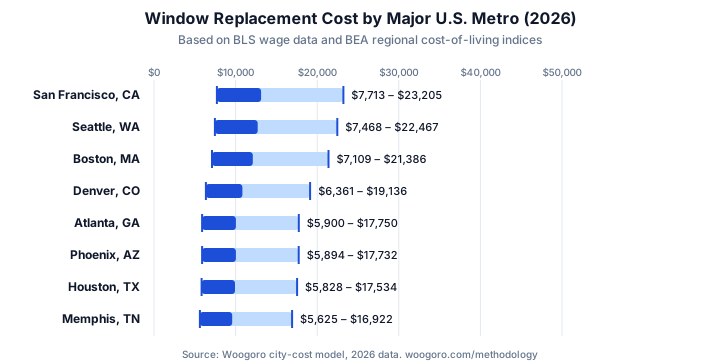
Window labor rates vary by metro because installation work scales with local construction wages. Below are 30 U.S. cities with their typical 10-window vinyl replacement range.
| City | 10-Window Vinyl | vs. National Median |
|---|---|---|
| Atlanta, GA | $5,820-$11,640 | ~3% lower |
| Austin, TX | $6,000-$12,000 | at median |
| Baltimore, MD | $6,300-$12,600 | ~5% higher |
| Boston, MA | $7,320-$14,640 | ~22% higher |
| Charlotte, NC | $5,700-$11,400 | ~5% lower |
| Chicago, IL | $6,300-$12,600 | ~5% higher |
| Columbus, OH | $5,580-$11,160 | ~7% lower |
| Dallas, TX | $5,820-$11,640 | ~3% lower |
| Denver, CO | $6,300-$12,600 | ~5% higher |
| Detroit, MI | $5,700-$11,400 | ~5% lower |
| Houston, TX | $5,820-$11,640 | ~3% lower |
| Indianapolis, IN | $5,580-$11,160 | ~7% lower |
| Jacksonville, FL | $5,700-$11,400 | ~5% lower |
| Kansas City, MO | $5,580-$11,160 | ~7% lower |
| Las Vegas, NV | $6,120-$12,240 | ~2% higher |
| Los Angeles, CA | $7,320-$14,640 | ~22% higher |
| Memphis, TN | $5,280-$10,560 | ~12% lower |
| Miami, FL | $6,000-$12,000 | at median |
| Milwaukee, WI | $5,820-$11,640 | ~3% lower |
| Minneapolis, MN | $6,180-$12,360 | ~3% higher |
| Nashville, TN | $5,700-$11,400 | ~5% lower |
| New York, NY | $7,800-$15,600 | ~30% higher |
| Philadelphia, PA | $6,300-$12,600 | ~5% higher |
| Phoenix, AZ | $5,880-$11,760 | ~2% lower |
| Portland, OR | $6,300-$12,600 | ~5% higher |
| Raleigh, NC | $5,700-$11,400 | ~5% lower |
| San Antonio, TX | $5,700-$11,400 | ~5% lower |
| San Diego, CA | $7,080-$14,160 | ~18% higher |
| San Francisco, CA | $7,920-$15,840 | ~32% higher |
| Seattle, WA | $6,720-$13,440 | ~12% higher |
See window pricing in 1,000+ U.S. cities → or browse the full cost guide library for related materials.
Energy Efficiency, U-Factor, and ENERGY STAR
The federal ENERGY STAR program rates windows by climate zone. Look for two numbers on the NFRC label of every window you buy:
- U-factor: Heat transfer rate. Lower is better. Cold climates (zones 5-8) want 0.27 or below. Mixed and warm climates can accept 0.30-0.40.
- SHGC (Solar Heat Gain Coefficient): Fraction of solar heat that passes through. Hot climates want 0.25 or below; cold climates can use 0.30-0.40 to gain free winter heat.
Glass package upgrades that improve these numbers:
- Low-E coating: Microscopic metallic layer that reflects infrared. Standard on almost all replacement windows; the question is which low-E (different coatings tune SHGC differently).
- Argon gas fill: Standard in double-pane low-E windows. Improves U-factor about 15% over plain air.
- Krypton gas fill: Used in triple-pane windows because it works better in narrow gaps. 30-50% more expensive than argon.
- Triple-pane glass: Adds 10-20% to window cost. Pays back in cold climates (zones 6+), marginal in moderate climates.
Federal tax credit: The Energy Efficient Home Improvement Credit (Section 25C, expanded by the Inflation Reduction Act) covers 30% of the cost of qualifying ENERGY STAR Most Efficient windows, capped at $600 per year. The credit is available through 2032. Save itemized invoices and the manufacturer's NFRC label, then claim on IRS Form 5695.
Utility rebates: Most major utilities offer $25 to $200 per qualifying window. Check your utility's rebate page before signing the install contract; some rebates require pre-approval.
Insert vs. Full-Frame Replacement
This single decision changes the price by 15-25% and changes how long the work takes.
- Insert (pocket) replacement: New window slides into the existing frame. Faster (1-2 hours per window), cheaper, and less messy. Loses about 1-2 inches of glass area because the new frame sits inside the old one. Only works if the existing frame, sill, and trim are sound.
- Full-frame replacement: Strips out the entire window down to the rough opening. Slower (3-5 hours per window), more expensive, exposes the wall studs. Required when the existing frame is rotted, water-damaged, out-of-square, or you're changing window size.
Honest installers will inspect existing frames before recommending insert. On homes 30+ years old, full-frame is usually the correct call because old wood frames may be hiding water damage. If a salesperson promises insert replacement without looking at your existing frames, be skeptical.
How to Get the Best Window Quote
- Count and measure first. Walk the house and count windows by operation type. Note rough opening dimensions. This is the input every contractor needs.
- Pick your top 2 frame materials. Get every contractor to quote both, typically vinyl vs fiberglass. Comparing two brands of the same material tells you nothing about your alternatives.
- Get 3 written quotes from 3 different sales channels. One direct-sales franchise (Renewal by Andersen, Champion, or Window Nation), one big-box (Home Depot or Lowe's installed), and one independent local installer. Pricing variance across channels is huge.
- Verify line items match. Same brand, same series, same glass package, same install method (insert vs full-frame), same trim and capping. Cheaper quotes often quietly downgrade glass or skip capping.
- Read the actual warranty document. Confirm transferability on home resale, what 'lifetime' means, glass-only vs full-window coverage, and labor warranty (separate from product warranty).
- Refuse same-day pricing pressure. Legitimate quotes hold 30 days. If a salesperson will not leave a written quote without a same-day signature, walk them out and call a different installer.
- Pay schedule sanity-check. 25-50% deposit is normal, full payment up front is not. Final payment after the job is fully complete and you've operated every window.
Window Quote Red Flags
The window industry has more aggressive sales tactics than almost any other home-improvement trade. Watch for these specifically.
- "Today only" or same-day pricing. Renewal by Andersen, Champion, and Window Nation salespeople routinely use this. Legitimate window quotes hold 30 days. The "discount" disappearing if you don't sign tonight is a manufactured pressure tactic.
- Lifetime warranty without a written warranty document. 'Lifetime' on a sales sheet means nothing. Demand the actual warranty PDF and read it before signing. Common voids: house resale, missed registration, painting the frame, using non-approved cleaners.
- Financing pressure. 'No payments for 18 months' offers usually convert to 18-25% APR if you don't pay in full by the end of the promo period. Read the financing terms separately from the price.
- Hidden capping/trim/lead-paint upcharges revealed mid-install. If these were not on the original quote, they are not your responsibility. Demand them in writing up front.
- Undisclosed cancellation fees. Federal law gives you a 3-day right to cancel home-improvement contracts signed in your home. Some shady contracts try to add cancellation penalties; these are unenforceable but cause headaches.
- Round-number quotes with no breakdown. "$12,000 for 10 windows" hides scope omissions. Always demand line items per window.
- "Pull the permit yourself" requests. If the contractor wants you to pull the permit, they may not be properly licensed.
- No proof of liability insurance. Ask for the certificate, then call the insurer to verify it's current.
- Below-market quotes (30%+ under others). Usually missing scope, downgraded glass, or unlicensed labor.
Permits, HOA, and Historic District Rules
Most cities require a permit for full-frame window replacement and any window changing in size or location. Like-for-like insert replacement (same opening, same operation type) often does not require a permit, though rules vary by city. Permit fees usually run $50 to $300, processed in 1-3 weeks. The contractor should pull the permit; if they ask you to pull it, that's a licensing red flag.
Even when no permit is required, three things still bind you:
- HOA covenants. Frame color, grille pattern, and brand are commonly regulated. Bronze frames in a white-frame neighborhood can get a tear-out order. Check before signing.
- Historic district rules. If your home is in a designated historic district, visible window changes typically require local commission review. Approval can take 4-12 weeks. Some districts require true-divided-light (real muntins between separate panes) instead of grilles between glass, which can double material cost.
- Egress requirements. Bedroom windows must meet International Residential Code egress minimums (5.7 sq ft openable, specific width and height). Replacement units that shrink openings can fail inspection.
For pre-1978 homes, federal EPA RRP rule requires lead-safe work practices. Hire an EPA-certified contractor and confirm certification number before signing. Lead testing and abatement adds $300-$800 to the project.
How Much Can You Save on Window Replacement?
Realistic savings levers, ranked by effort vs. payoff:
- Get 3 quotes across 3 sales channels (saves 15-30%). The single biggest savings move. Direct-sales franchise pricing routinely runs 25-50% above independent installer pricing for the same window.
- Skip the direct-sales channel. Renewal by Andersen, Champion premium tier, and Window Nation include in-home sales overhead that you pay for. The same Andersen 100 series sold through a dealer is materially cheaper.
- Off-season install (saves 5-10%). January-March in temperate climates. Contractor schedules are open and per-window rates drop.
- Insert instead of full-frame (saves 15-25%). Only if your existing frames are sound. Get an honest inspection first.
- Skip triple-pane in moderate climates. Double-pane low-E with argon is sufficient through climate zone 5. Triple-pane payback only kicks in zones 6+.
- Replace in batches. If you can't afford all 15 windows now, do the worst-performing 6-8 first. Per-window cost is roughly the same; you just delay.
- Claim the federal tax credit. 30% of qualifying ENERGY STAR Most Efficient costs, capped at $600/year through 2032.
- Stack utility rebates. $25-$200 per qualifying window. Check before signing.
Window Replacement FAQ
How much does window replacement cost in 2026?
Window replacement costs $6,000 to $18,000 for a typical 10-window home in 2026. Vinyl windows average $400 to $800 installed per window, fiberglass runs $700 to $1,200, and wood-clad runs $900 to $1,600. Total cost depends on frame material, window count, glass package, full-frame vs insert install, and local labor rates.
What is the cheapest window replacement option?
Vinyl windows are the cheapest option at $400 to $800 installed per window. Entry-level builder-grade vinyl from brands like Window World, Champion, or Pella 250 series typically lands at the low end. For a 10-window home, expect $4,000 to $8,000 total. Aluminum is even cheaper but rare in residential because of poor thermal performance.
How much does it cost to replace 10 windows?
Replacing 10 windows costs $6,000 to $16,000 in 2026 for typical residential sizes. Vinyl runs $4,000 to $8,000, fiberglass runs $7,000 to $12,000, and wood-clad runs $9,000 to $16,000. Add 15 to 25 percent if you need full-frame replacement instead of insert. Premium brands like Andersen 400, Pella Reserve, and Marvin Signature can push a 10-window project past $20,000.
Are vinyl or fiberglass windows better?
Fiberglass windows outperform vinyl on durability, color stability, and structural strength. Fiberglass expands and contracts at almost the same rate as glass, so seals last longer. Vinyl is cheaper upfront and easier to find. For homes you plan to keep 15+ years or in extreme climates, fiberglass usually wins on lifetime cost. For shorter stays or budget projects, vinyl is fine.
Should I worry about lifetime warranty fine print?
Yes. Most window 'lifetime' warranties are limited lifetime, transferability is restricted, and they often cover glass-only or specific failure modes. Common voids include house resale (warranty does not transfer or transfers only once), missed registration deadlines, painting or modifying the frame, and using non-approved cleaners. Read the actual warranty document, not the sales sheet, before signing.
Do I need a permit for window replacement?
Most cities require a permit for full-frame window replacement and any window changing in size or location. Like-for-like insert replacement (same opening, same operation type) often does not require a permit. Permits typically cost $50 to $300. Historic districts and HOAs add separate review steps. The contractor should pull the permit; if they ask you to do it, that is a licensing red flag.
Insert vs full-frame replacement: which do I need?
Insert (also called pocket) replacement uses your existing frame and is 15 to 25 percent cheaper, faster, and less messy. It only works if the existing frame, sill, and trim are sound. Full-frame replacement removes the entire window down to the rough opening and is the right call on older homes with rotted sills, water damage, or out-of-square frames. Honest installers will inspect the frames before recommending insert.
Does the federal tax credit cover window replacement?
Yes. The federal Energy Efficient Home Improvement Credit (Section 25C) covers 30 percent of the cost of qualifying ENERGY STAR Most Efficient windows, capped at $600 per year. Credits are claimed on IRS Form 5695. Many states and utilities add separate rebates of $25 to $200 per window. Save itemized invoices and the manufacturer's NFRC label for tax filing.
See if your window quote is fair
Upload your contractor quote and we'll compare it against city wage data, flag missing scope, and tell you the realistic price range for your exact project. Free, no email required.
How We Calculate Window Replacement Costs
Every per-window range on this page is built from three public datasets: Bureau of Labor Statistics Occupational Employment and Wage Statistics for window-installation labor, Bureau of Economic Analysis Regional Price Parities for material adjustments, and 2026 retail material pricing from major U.S. window distributors and manufacturer dealer networks. Ranges represent the middle 60-70% of typical residential quotes, not extremes. Direct-sales franchise pricing (Renewal by Andersen, Champion premium, Window Nation) typically falls above the published ranges. Read our full methodology for details on how city multipliers are derived.