

Got a siding quote?
Upload it and we'll check the price against city wage data and flag missing scope items like house wrap, flashing, or trim wrap. Free, no email.
Average Siding Cost by Material (2026)
The single biggest pricing lever on a siding quote is material choice. The table below shows installed cost per square foot for the most common residential siding types, plus a typical 2,500 sq ft wall-area total and what each material is best for.
| Material | Per Sq Ft (Installed) | 2,500 SqFt Wall Total | Best For |
|---|---|---|---|
| Vinyl | $4-$8/sqft | $10,000-$20,000 | Budget-friendly, low maintenance |
| Aluminum | $5-$10/sqft | $12,500-$25,000 | Coastal, fire-prone, mid-range budget |
| Engineered wood (LP SmartSide) | $6-$11/sqft | $15,000-$27,500 | Wood look at lower cost, moisture resistant |
| Steel | $7-$13/sqft | $17,500-$32,500 | Hail and fire resistance, modern look |
| Fiber cement (James Hardie) | $7-$14/sqft | $17,500-$35,000 | 50-yr lifespan, fire and rot proof |
| Real wood (cedar, redwood) | $7-$15/sqft | $17,500-$37,500 | Classic look, premium curb appeal |
| Brick veneer | $15-$30/sqft | $37,500-$75,000 | Lifetime durability, no repaint |
| Stone veneer | $30-$50/sqft | $75,000-$125,000 | Premium accent, highest curb appeal |
Prices include materials, labor, standard tear-off of one existing layer, house wrap, basic trim, and disposal. Insulation board, soffit and fascia repair, and painting on primed Hardie are usually quoted separately.
Siding Cost by Home Size
Siding pricing scales with wall area, not square footage of living space. A two-story home has roughly 50 percent more wall area than a single-story home of the same floor area. Below are typical total costs for the three most common siding materials at standard residential sizes.
| Home Size (Wall Area) | Vinyl | Fiber Cement | Engineered Wood |
|---|---|---|---|
| 1,500 sqft (small ranch) | $6,000-$12,000 | $10,500-$21,000 | $9,000-$16,500 |
| 2,000 sqft (typical ranch) | $8,000-$16,000 | $14,000-$28,000 | $12,000-$22,000 |
| 2,500 sqft (typical 2-story) | $10,000-$20,000 | $17,500-$35,000 | $15,000-$27,500 |
| 3,000 sqft (large 2-story) | $12,000-$24,000 | $21,000-$42,000 | $18,000-$33,000 |
| 4,000 sqft (estate) | $16,000-$32,000 | $28,000-$56,000 | $24,000-$44,000 |
Vinyl Siding Cost: Gauges, Profiles, and Premium Colors
Vinyl is still the most-installed siding material in the US because the cheapest grades start under $4 per sq ft and the premium grades top out around $8. Three pricing levers matter inside vinyl.
- Gauge / thickness ($4-$8/sqft installed): Builder-grade vinyl is .040 inches thick and is what new tract-builders use. Standard residential is .044 inches. Premium is .046 to .052 inches. Thicker vinyl resists impact, holds darker colors better, and lasts 30 plus years vs. 15 to 20 for builder-grade.
- Profile: Lap is cheapest. Dutch lap and beaded styles add 10 to 20 percent. Vertical board-and-batten panels add 15 to 25 percent. Shake or scallop accents on gables add 30 to 50 percent.
- Color stability: Cheap vinyl in dark colors can warp from solar gain. Pay for "premium dark color" formulations from CertainTeed Cedar Impressions, Mastic Carvedwood, or Royal Estate Premium if you want a deep color that stays.
- Insulated vinyl ($6.50-$8/sqft): Foam-backed vinyl adds R-2 to R-4 of wall insulation and roughly 30 percent more impact resistance. Lifetime cost usually wins in cold climates.
For a typical 2,500 sq ft wall area, expect $4,000 to $6,000 more for premium insulated vinyl than for builder-grade. The lifetime gap often pays for itself in heating savings and not having to recall your installer for warped panels in year 8.
Fiber Cement (James Hardie) Cost: ColorPlus vs. Primed, Lap vs. Panel vs. Shake
Fiber cement is the durability champion, with a 50-plus-year expected lifespan and Class A fire rating. James Hardie owns most of the U.S. residential market under the HardiePlank, HardieShingle, and HardiePanel brand names. The pricing structure within Hardie is straightforward.
- HardiePlank lap (primed) ($7-$11/sqft installed): The default. Comes primed and needs paint applied on-site (usually a separate $1 to $2 per sq ft line). 30-year limited warranty on the substrate.
- HardiePlank lap (ColorPlus pre-finished) ($9-$14/sqft installed): Factory-applied baked-on color with a 15-year color warranty. No on-site paint job. Locks you into ColorPlus colors but eliminates the paint risk.
- HardiePanel (vertical) ($8-$12/sqft installed): 4x8 or 4x10 sheets for board-and-batten or modern vertical looks. Slightly less labor than lap.
- HardieShingle (cedar shake replacement) ($10-$15/sqft installed): Individual shingle look at fiber cement durability. Common on Cape Cod and shingle-style architecture.
- James Hardie Certified Contractor: Required for the full 30-year warranty. Verify by serial number on the JamesHardie.com installer locator. Uncertified installs cut warranty to 5 years and the manufacturer will refuse claims.
Hardie costs about 60 to 100 percent more than equivalent vinyl, but on a 30-year ownership window the total cost (initial plus repaint cycles plus replacement) usually beats vinyl, especially in fire-prone or insect-heavy regions. If you're flipping the home in 5 years, vinyl wins.
Engineered Wood and Real Wood Siding
For homeowners who want a wood look without the premium of cedar, engineered wood (mostly LP SmartSide) is the value pick. Real cedar and redwood remain the curb-appeal kings but cost twice as much and need staining every 3 to 5 years.
- LP SmartSide ($6-$11/sqft installed): Treated wood-fiber and resin engineered for moisture and termite resistance. Comes pre-primed; finish paint applied on-site. 50-year limited substrate warranty, 5-year prefinish warranty if SmartSide is ordered prefinished. Looks like real wood from 10 feet away.
- Real cedar lap ($7-$13/sqft installed): Western red cedar is naturally rot- and insect-resistant. Beautiful grain. Needs stain or sealer every 3 to 5 years to stop graying. 25 to 40 year lifespan with maintenance.
- Real cedar shake ($10-$15/sqft installed): Hand-split or sawn shingles. Extremely high curb appeal. Most expensive wood option to install due to layering labor.
- Redwood ($10-$15/sqft installed): Tightest grain, deepest natural color, most rot-resistant. Hard to source east of the Rockies, which inflates East Coast pricing.
For a 2,500 sq ft wall area, expect to pay roughly $5,000 more for real cedar than for LP SmartSide. The wood lover's premium. Engineered wood usually wins on lifetime cost for the typical 10 to 15 year homeowner stay.
Brick and Stone Veneer: Curb Appeal at a Premium
Brick and stone veneer typically only cover the front facade or accent gables (not the whole house) because the cost would price out most homes. Used as accents, they add disproportionate curb appeal.
- Manufactured stone veneer ($15-$25/sqft installed): Lightweight portland-cement-based panels that look like real stone. Glued to a wire-mesh substrate. 50-year lifespan if flashing is correct. Failure mode is moisture intrusion behind the veneer rotting the sheathing; insist on a rainscreen detail.
- Real stone veneer ($30-$50/sqft installed): Cut natural stone (limestone, granite, ledgestone). Heavier and requires masonry experience. Lifetime material; the substrate fails before the stone does.
- Brick veneer ($15-$30/sqft installed): Single wythe of brick attached to a wood-frame wall behind. Lifetime material. Look-and-feel of a full brick home at a fraction of the structural cost.
- Stucco ($7-$15/sqft installed): Three-coat traditional stucco on metal lath. Common in the Southwest. Cracks over time (especially in freeze-thaw climates) and needs patching every 5 to 10 years.
Metal Siding: Aluminum and Steel
Metal siding is a smaller niche than vinyl or Hardie but matters in coastal, fire-prone, and modern-design markets.
- Aluminum ($5-$10/sqft installed): Lightweight, doesn't rust, holds paint well. Dents easily from hail or stray balls. Long the default in coastal Florida and California.
- Steel ($7-$13/sqft installed): Heavier, dent-resistant, Class A fire rating. The premium choice in hail-prone Plains states and modern-design urban builds. Brands like ABC, Quality Edge, and EDCO dominate the residential market.
What Should a Siding Quote Include?
Itemized quotes are the only way to compare contractors fairly. Round-number quotes ("$22,000 for the whole house") hide the same scope omissions over and over. A complete siding quote should list every line below.
- Total wall area in square feet (not living square footage)
- Tear-off and disposal of existing siding (note number of layers)
- Sheathing inspection and any rotted-OSB replacement allowance
- House wrap (Tyvek, Typar, or equivalent) with seam taping
- Flashing at all penetrations: windows, doors, dryer vents, hose bibs, electrical
- Insulation board (XPS or polyiso) if specified
- Furring strips for rainscreen detail (recommended on Hardie)
- Trim package: corner posts, J-channel, window and door surrounds, frieze board
- Soffit and fascia repair or replacement
- Gable-end siding (often quoted separately for shake or scallop accents)
- Caulking at all joints
- Paint on primed Hardie (separately priced if not ColorPlus)
- Permit pulled by contractor
- James Hardie certification or vinyl manufacturer registration on file
- Cleanup and magnetic nail sweep
- Workmanship warranty (1-3 years is standard)
- Material warranty (manufacturer's, often 30-year limited on Hardie)
Hidden Siding Costs Most Homeowners Miss
Siding-quote surprises come from a small set of recurring omissions. Watch for these before you sign.
- House wrap ($0.30-$0.75/sqft): Sometimes treated as optional or assumed-existing. Always required on a tear-off install.
- Insulation board ($1-$3/sqft): Adds R-3 to R-7 to the wall assembly. Almost never in the base quote and almost always worth it on a tear-off.
- Soffit and fascia repair ($800-$3,500): Rotted or damaged trim is common on older homes. Priced as a separate allowance line; expect overage on inspection.
- Sheathing replacement ($2-$5/sqft of damage): When the OSB or plywood under the old siding is rotten, it has to be replaced. Quotes should specify a per-square-foot rate for any discovered damage.
- Trim wrap (aluminum-clad windows and doors): Wrapping wood trim in aluminum coil costs $8-$20 per linear foot. Skipping it leaves wood trim that needs paint refresh in 5-7 years.
- Tear-off of existing siding ($1-$3/sqft): Often quoted separately. Asbestos siding triggers $8-$15/sqft certified abatement.
- Permit fees ($100-$500): Some contractors leave this off and ask the homeowner to pull it.
- Paint on primed Hardie ($1-$2/sqft): Primed (non-ColorPlus) Hardie needs an on-site paint job. Almost always a separate line.
- Lead paint testing on pre-1978 homes: EPA RRP rule requires certified contractors and dust containment when disturbing lead paint, often $500-$2,000 added.
- Disposal fees ($200-$600): Especially heavy on a tear-off with multiple layers or stucco.
Siding Cost by City
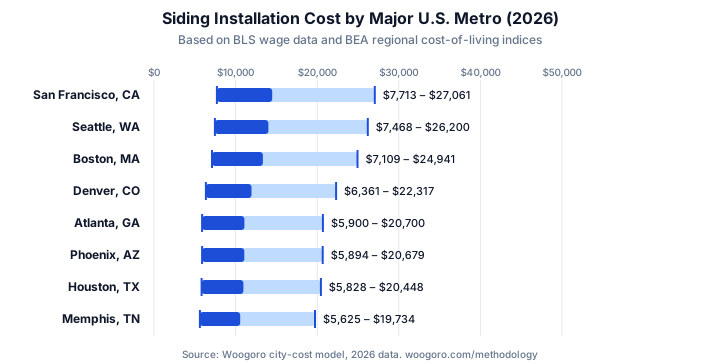
Siding labor rates vary by metro because carpentry, exterior install, and tear-off scale with local construction wages. Below are 30 U.S. cities with their typical 2,500 sq ft wall-area Hardie ColorPlus install range and the variance vs. the U.S. median.
| City | Hardie ColorPlus (2,500 sqft) | vs. National Median |
|---|---|---|
| Atlanta, GA | $21,800-$33,000 | ~3% lower |
| Austin, TX | $22,500-$34,000 | at median |
| Baltimore, MD | $23,600-$35,700 | ~5% higher |
| Boston, MA | $27,500-$41,500 | ~22% higher |
| Charlotte, NC | $21,400-$32,300 | ~5% lower |
| Chicago, IL | $23,600-$35,700 | ~5% higher |
| Columbus, OH | $20,900-$31,600 | ~7% lower |
| Dallas, TX | $21,800-$33,000 | ~3% lower |
| Denver, CO | $23,600-$35,700 | ~5% higher |
| Detroit, MI | $21,400-$32,300 | ~5% lower |
| Houston, TX | $21,800-$33,000 | ~3% lower |
| Indianapolis, IN | $20,900-$31,600 | ~7% lower |
| Jacksonville, FL | $21,400-$32,300 | ~5% lower |
| Kansas City, MO | $20,900-$31,600 | ~7% lower |
| Las Vegas, NV | $22,950-$34,700 | ~2% higher |
| Los Angeles, CA | $27,500-$41,500 | ~22% higher |
| Memphis, TN | $19,800-$29,900 | ~12% lower |
| Miami, FL | $22,500-$34,000 | at median |
| Milwaukee, WI | $21,800-$33,000 | ~3% lower |
| Minneapolis, MN | $23,200-$35,000 | ~3% higher |
| Nashville, TN | $21,400-$32,300 | ~5% lower |
| New York, NY | $29,250-$44,200 | ~30% higher |
| Philadelphia, PA | $23,600-$35,700 | ~5% higher |
| Phoenix, AZ | $22,000-$33,300 | ~2% lower |
| Portland, OR | $23,600-$35,700 | ~5% higher |
| Raleigh, NC | $21,400-$32,300 | ~5% lower |
| San Antonio, TX | $21,400-$32,300 | ~5% lower |
| San Diego, CA | $26,550-$40,100 | ~18% higher |
| San Francisco, CA | $29,700-$44,900 | ~32% higher |
| Seattle, WA | $25,200-$38,100 | ~12% higher |
See siding pricing in 1,000+ U.S. cities → or browse the full siding cost guide for material deep-dives.
How to Get the Best Siding Quote
- Measure first. Calculate wall area (perimeter times average wall height, minus large openings). This is the input every contractor needs and it stops them from sizing your job from a drive-by.
- Pick your top 2 materials. Get every contractor to quote both. Comparing vinyl-only vs. Hardie-only quotes tells you nothing about your alternatives.
- Get 3 written quotes. Itemized, on letterhead, with a quote-valid-through date. A single quote almost always means overpaying 15 to 25 percent.
- Verify line items match. Same product (HardiePlank ColorPlus 8.25 inch lap, vinyl gauge .046 insulated, etc.), same trim package, same removal scope, same color/finish.
- Confirm Hardie certification. Verify by serial number on the James Hardie installer locator. Uncertified installs void the 30-year warranty.
- Check the workmanship warranty. 1-year minimum, 3-year is good. Walk away from anything less.
- Confirm permit responsibility. The contractor pulls the permit. If they ask you to pull it, that's a licensing red flag.
- Pay schedule sanity-check. 25 to 40 percent deposit is normal. Anything over 50 percent up front, or full payment before completion, is a red flag.
Siding Quote Red Flags
- Lapping new siding over old. Hides rot, traps moisture, voids manufacturer warranty. Always tear off.
- Missing house wrap. Wrap is non-negotiable. Some bargain quotes skip it to win on price; the homeowner pays in 5-10 years with mold and sheathing rot.
- No flashing at penetrations. Windows, doors, dryer vents, and hose bibs all need flashing. Skipping it is the #1 source of siding-job water damage.
- "We don't need to be Hardie certified." If they're installing James Hardie product, certification is required for the full warranty. Walk away.
- No insulation board on a tear-off install. When the wall is open, this is the cheapest time to add R-value to the assembly. Some bargain quotes skip it; insist on it.
- Round-number quotes with no breakdown. "$22,000 for the whole house" hides scope omissions. Always demand line items.
- "Pull the permit yourself" requests. If the contractor wants you to pull the permit, they may not be properly licensed.
- Same-day pressure to sign. Legitimate contractors hold their price 30 days. High-pressure tactics correlate with inflated pricing.
- Cash-only or unusual payment methods. Five-figure projects don't run on cash.
- Below-market quotes (30%+ under others). Usually missing scope, materials, or licensing.
- No proof of liability insurance. Ask for the certificate, then call the insurer to verify it's current.
Siding Permits, HOA Rules, and Lead Paint
Most U.S. cities require a permit for full siding replacement; partial repairs usually do not. Permit fees run $100 to $500, processed in 1 to 4 weeks. The contractor should pull the permit. If they ask you to pull it, that is a licensing red flag.
Beyond the permit, three things still bind you:
- HOA covenants. Material, color, and trim style are commonly regulated. Submit color samples and a Hardie or vinyl manufacturer color chart 4-6 weeks before scheduled work.
- EPA RRP lead paint rule. Pre-1978 homes trigger lead-safe work practices when paint is disturbed. Contractors must be EPA RRP certified and use dust containment. Penalty fines run $20,000+ per violation.
- Asbestos siding. Some pre-1980 homes have cement-asbestos siding. Removal requires a licensed asbestos abatement contractor at $8-$15 per sq ft. Do NOT let a general contractor tear it off.
If your home was built before 1980 and has the original siding, ask for both lead and asbestos testing before any tear-off begins. Cheap insurance against five-figure mid-job surprises.
How Much Can You Save on Siding?
Realistic savings levers, ranked by effort vs. payoff:
- Get 3 quotes (saves 10-25%). Single-quote homeowners pay roughly 20 percent above market on average. Highest-ROI move.
- Vinyl instead of Hardie (saves 30-50%). If you're flipping in 5 years or you're in a region without fire risk, vinyl gets you most of the look at a fraction of the cost.
- HardiePlank primed instead of ColorPlus (saves 10-20%). But factor in the on-site paint cost and 5-7 year repaint cycle. ColorPlus often wins lifetime cost.
- Skip the gable accents. Shake and scallop gable accents add 5-10 percent to total cost for a small visual gain.
- Off-season install (saves 5-15%). Late fall and winter scheduling in temperate climates. Contractor schedules are open and per-sqft rates drop.
- Hardie ColorPlus instead of upgrading paint cycle. Eliminates the $1-2/sqft on-site paint job and the repaint every 7-10 years.
- DIY landscaping cleanup after tear-off. Saves $300-$800 on big jobs.
- Group with a neighbor. Shared trip charge and bulk material order can shave 5-10 percent if both homes side at the same time.
Siding Installation FAQ
How much does siding installation cost in 2026?
Siding installation costs $10,000 to $50,000 for a typical 2,000 square foot home in 2026, with most homeowners spending $14,000 to $25,000. Vinyl runs $4 to $8 per square foot installed, fiber cement (James Hardie) runs $7 to $14 per square foot, engineered wood (LP SmartSide) runs $6 to $11 per square foot, real wood runs $7 to $15, and stone or brick veneer runs $15 to $50. A typical 2,000 sq ft house has 2,500 to 3,000 sq ft of wall area to side.
Is fiber cement siding worth the extra cost?
Fiber cement (HardiePlank, James Hardie) costs about 60 to 100 percent more than vinyl but lasts 50 plus years with paint refresh every 15 to 20 years. It is fire-resistant, insect-proof, and rot-proof. Hardie ColorPlus pre-finished panels carry a 15-year color warranty. For homes where you plan to stay 10 plus years or in high-fire-risk regions, fiber cement is usually the better lifetime-cost choice. Insist the contractor is James Hardie certified; uncertified installs void the warranty.
How much does vinyl siding cost per square foot?
Vinyl siding costs $4 to $8 per square foot installed in 2026. Builder-grade .040 inch vinyl runs $4 to $5 per square foot. Standard .044 inch runs $5 to $6.50. Premium .046 to .052 inch insulated vinyl with darker color stability runs $6.50 to $8. Lap profile is cheapest, Dutch lap and beaded run 10 to 20 percent more, and shake or scallop accents run 30 to 50 percent more.
How long does siding installation take?
A standard 2,000 to 2,500 square foot home takes 5 to 10 days for vinyl, 7 to 14 days for fiber cement, and 10 to 21 days for engineered wood, real wood, or stucco. Removal of existing siding adds 1 to 3 days. Custom trim, multiple stories, and complex rooflines extend the timeline. Permits and HOA approval typically add 2 to 6 weeks before work starts.
Should I replace or repair my siding?
Repair when damage is localized (under 25 percent of one wall), siding is under 15 years old, and matching material is available. Replace when damage is widespread, siding is over 20 years old, you are repainting anyway, or the underlying sheathing has moisture damage. Mixed-age siding hurts resale, and patching faded vinyl rarely matches the existing color.
Do I need a permit to replace siding?
Most cities require a permit for full siding replacement; partial repairs usually do not. Permit fees run $100 to $500. The contractor should pull the permit. HOA approval is often required even when no permit is needed. Submit material samples and color options 4 to 6 weeks before scheduled work. Pre-1978 homes also trigger EPA RRP lead-paint rules if any existing paint will be disturbed.
How much does it cost to remove old siding?
Old siding removal costs $1 to $3 per square foot. Asbestos siding removal costs $8 to $15 per square foot due to certified abatement requirements. Stucco removal runs $3 to $8 per square foot. Most installers include removal in the install quote at a small discount. Lapping new siding over old is a red flag because it hides rot and traps moisture.
Can I install siding myself?
Vinyl siding is the most DIY-friendly and saves 40 to 60 percent on labor. Fiber cement requires specialized cutting tools and OSHA-compliant silica dust controls and is not recommended for DIY. Engineered wood and steel are also DIY-feasible but slower. Most warranties require professional installation, and the James Hardie 30-year warranty is voided by uncertified installs.
See if your siding quote is fair
Upload your contractor quote and we'll compare it against city wage data, flag missing scope (house wrap, flashing, trim wrap), and tell you the realistic price range for your exact project. Free, no email required.
How We Calculate Siding Costs
Every per-square-foot range on this page is built from three public datasets: Bureau of Labor Statistics Occupational Employment and Wage Statistics for carpenters and exterior installers, Bureau of Economic Analysis Regional Price Parities for material adjustments, and 2026 retail material pricing from major U.S. siding distributors and manufacturers (James Hardie, CertainTeed, LP, Mastic). Ranges represent the middle 60-70% of typical residential quotes, not extremes. Read our full methodology for details on how city multipliers are derived.