

Got a garage door quote?
Upload it and we'll check the price against city wage data and flag missing scope items like new tracks, new springs, and balance test. Free, no email.
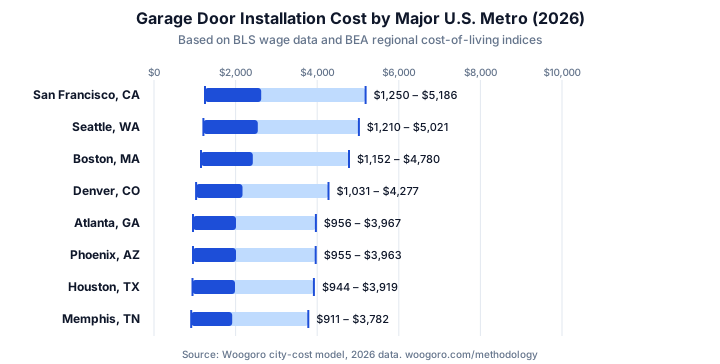
Average Garage Door Cost by Type (2026)
The biggest pricing levers on a garage door quote are size (single vs. double), material (steel, wood, aluminum-glass), and insulation level. The table below shows installed cost by type, plus what each type is best for.
| Door Type | Typical Range (Installed) | Best For |
|---|---|---|
| Single-car steel, non-insulated (8x7 or 9x7) | $700-$1,500 | Detached garage, mild climate, budget |
| Single-car steel, insulated | $1,000-$2,000 | Attached single-car garage |
| Double-car steel, non-insulated (16x7) | $1,200-$2,500 | Detached double, budget replacement |
| Double-car steel, polystyrene-insulated (R-6 to R-9) | $1,500-$2,800 | Mild-climate attached garage |
| Double-car steel, polyurethane-insulated (R-12 to R-19) | $1,800-$3,500 | Cold-climate attached garage, room above |
| Carriage-house style (steel) | $1,800-$4,000 | Curb appeal upgrade, traditional homes |
| Wood (cedar, hemlock, mahogany) | $3,000-$6,000+ | Custom, premium curb appeal |
| Aluminum + glass (modern) | $4,000-$8,000+ | Modern architecture, light into garage |
| Fiberglass | $1,500-$3,000 | Coastal homes, salt-air resistance |
| Composite | $2,500-$4,500 | Wood look, low maintenance |
| Opener with install | $300-$700 | Add to any door install |
| Spring replacement only | $150-$400 | Most common single-line repair |
Pricing includes door, new tracks, new springs, hardware, removal of existing door, weatherstripping, and basic labor. Opener, smart features, custom hardware, and structural repair are separate.
Garage Door Cost by Insulation Level
Insulation is the most important secondary lever after size. R-value drives both upfront cost and long-term HVAC savings. Below are typical installed costs for a standard 16x7 double-car door at three insulation levels.
| Insulation | R-Value | Double-Car Cost | Best For |
|---|---|---|---|
| None (single-layer steel) | R-0 | $1,200-$2,500 | Detached garage, mild climate |
| Polystyrene (sandwich) | R-6 to R-9 | $1,500-$2,800 | Mild climate attached |
| Polyurethane (sprayed) | R-12 to R-19 | $1,800-$3,500 | Cold climate, attached, room above |
| Premium polyurethane (3-layer construction) | R-18 to R-21 | $2,200-$4,200 | Extreme cold, finished garage |
Insulated doors are also quieter, stiffer (less prone to denting), and hold their shape better in heat. Even in mild climates, R-12 polyurethane usually wins lifetime cost on attached garages.
Garage Door Materials: Steel vs. Wood vs. Aluminum-Glass
Material choice drives the bottom 70 percent of cost variance. Steel is the volume leader; wood and aluminum-glass are premium choices.
- Steel ($700-$3,500 installed): 90 percent of residential doors are steel. Available in flush, raised-panel, and carriage-house styles. Powder-coated finishes resist rust 20-30 years. Top brands: Clopay, Amarr, Wayne Dalton, CHI.
- Wood ($3,000-$6,000+ installed): Cedar, hemlock, redwood, and mahogany. Custom-builds are common. Beautiful and uniquely heavy. Requires sealing every 2-3 years to prevent warping. 20 to 30 year lifespan with maintenance.
- Aluminum + Glass ($4,000-$8,000+ installed): Modern, contemporary architecture. Lets light into the garage. Lightweight (less wear on opener). Frameless or full-glass options. Top brands: Clopay Avante, Amarr Vista.
- Fiberglass ($1,500-$3,000 installed): Coastal homes where steel rusts. Lightweight, dent-resistant, but can fade in extreme sun.
- Composite ($2,500-$4,500 installed): Wood look at the maintenance level of steel. Insulated, stiff, and durable.
For most homes, polyurethane-insulated steel is the sweet spot. Wood and aluminum-glass are worth it when curb appeal or architectural fit matters more than cost.
Panel Style and Window Options
Panel style is a small price lever ($100-$500) but a big curb-appeal lever. The four main styles each fit different home architectures.
- Raised panel ($0-$200 over flush): Default residential style. Each panel has a raised border. Works on traditional homes.
- Flush ($0): Smooth no-pattern panels. Modern, minimalist look. Cheapest.
- Carriage-house ($300-$1,200 over raised-panel): Mimics swing-out barn doors but operates as standard sectional. X-brace hardware, rustic look. Increasingly popular.
- Modern with horizontal lines ($200-$600 over raised-panel): Long horizontal sections. Pairs with mid-century modern and contemporary homes.
- Windows (top section, $100-$500): Single row of glass panels in the top section. Light into the garage, curb-appeal upgrade. Insulated glass or frosted privacy glass available.
- Decorative hardware ($75-$400): Faux strap hinges, handles, latch hardware for carriage-house look. Adds 5-15 percent to total.
Garage Door Opener Types
The opener is a separate $300-$700 line item on most quotes. Four drive types dominate residential, plus jackshaft for high-ceiling installs.
- Chain-drive ($250-$450 installed): Cheapest, most durable, loudest. Metal chain drives the trolley. Best for detached garages where noise doesn't matter.
- Belt-drive ($350-$650 installed): Reinforced rubber belt. Quietest of the standard types. Recommended for attached garages with bedrooms above. Top picks: LiftMaster 8550W, Chamberlain B1381.
- Screw-drive ($300-$550 installed): Threaded steel rod. Mid-noise, mid-price. Less common in 2026 as belt-drive has gotten cheaper.
- Jackshaft / wall-mount ($600-$1,000 installed): Mounts on the wall beside the door instead of overhead. Best for vaulted ceilings or where overhead space is a problem (storage rack, gym equipment). LiftMaster 8500W is the standard.
- Direct-drive (Sommer/German imports, $500-$800 installed): Motor moves along the rail with no chain or belt. Very quiet, lifetime warranty common.
- Smart features (LiftMaster MyQ, Chamberlain, Genie Aladdin): Built into most $400+ openers in 2026. Wi-Fi control, smartphone app, auto-close timer, geofence open. HomeKit, Alexa, Google Home compatibility.
- Battery backup ($100-$200 add-on): Required by California (SB-969) and Texas code on new installs. Lets the opener work during a power outage. Worth it everywhere.
What Should a Garage Door Quote Include?
Itemized quotes are the only way to compare contractors fairly. Round-number quotes ("$2,500 installed") hide reused tracks, missing weatherstripping, or skipped balance tests. A complete garage door quote should list every line below.
- Door brand, model, and color (e.g., Clopay Gallery Collection 4050, white)
- Door size (16x7, 8x7, etc.) and panel style
- Insulation R-value if applicable
- Window inserts (number, style, glass type)
- NEW tracks (vertical and horizontal)
- NEW torsion springs (cycle rating, e.g., 25,000 cycles for double door)
- NEW rollers (steel vs. nylon, sealed bearings preferred)
- NEW hinges (residential or commercial grade)
- Cables (galvanized aircraft cable)
- Opener model and HP (e.g., LiftMaster 8500W jackshaft)
- Battery backup if required by code
- Two remotes plus wireless keypad
- Safety photo eyes (federally required since 1993)
- Bottom seal weatherstripping
- Side and top weatherstripping
- Decorative hardware if quoted
- Removal and disposal of existing door
- Auto-reverse safety test (1.5 inch obstacle)
- Balance test (door stays put at half-open with opener disconnected)
- Permit if required
- Workmanship warranty (1-3 years standard)
- Material warranty (manufacturer's, typically 10-20 years on steel, lifetime on premium)
Hidden Garage Door Costs Most Homeowners Miss
Garage door surprises mostly come from a small set of recurring traps. Watch for these before signing.
- Spring upgrade ($150-$350): Standard springs are 10,000-cycle (about 7 years). Upgrade to 25,000 or 50,000 cycle ($150-$350 more) to triple the life. The labor cost on a future spring replacement is the same, so this almost always pays back.
- Track replacement ($100-$300): Cheaper quotes reuse old tracks. New tracks should be standard with any new door. Bent or rusted tracks fail the new door's smooth operation.
- Opener removal/reinstall ($75-$150): If you're keeping your existing opener, taking it down and reinstalling on the new door is often charged separately.
- New opener for heavier door ($300-$700): Reusing a 1/2 HP chain-drive opener with a new heavy insulated door overworks the motor. Insulated and wood doors typically need 3/4 HP minimum.
- Keypad and extra remotes ($30-$100 each): Often only one remote and no keypad in the base quote.
- Insulation upgrade ($100-$400): Going from R-6 to R-12 polyurethane.
- Wi-Fi/smart upgrade ($100-$300): Built into most newer openers but bargain-tier openers often lack it.
- Trim and weatherstripping replacement: Old trim and weatherstrip often need replacement; many quotes miss this.
- Removal of existing door ($100-$300): Sometimes quoted separately.
- Concrete repair or framing fix: Older garage openings sometimes need concrete patching at the floor or framing repair at the header. Discovered after old door comes off; expect overage.
- Permit fees ($50-$300): Required in some jurisdictions for new openings; rare for direct replacements.
Garage Door Cost by City
Garage door labor rates vary by metro because installation, hardware, and permitting fees scale with local construction wages. Below are 30 U.S. cities with their typical insulated 16x7 double-car door range and the variance vs. the U.S. median.
| City | Insulated Double-Car (Installed) | vs. National Median |
|---|---|---|
| Atlanta, GA | $1,750-$3,400 | ~3% lower |
| Austin, TX | $1,800-$3,500 | at median |
| Baltimore, MD | $1,890-$3,675 | ~5% higher |
| Boston, MA | $2,200-$4,270 | ~22% higher |
| Charlotte, NC | $1,710-$3,325 | ~5% lower |
| Chicago, IL | $1,890-$3,675 | ~5% higher |
| Columbus, OH | $1,675-$3,255 | ~7% lower |
| Dallas, TX | $1,750-$3,400 | ~3% lower |
| Denver, CO | $1,890-$3,675 | ~5% higher |
| Detroit, MI | $1,710-$3,325 | ~5% lower |
| Houston, TX | $1,750-$3,400 | ~3% lower |
| Indianapolis, IN | $1,675-$3,255 | ~7% lower |
| Jacksonville, FL | $1,710-$3,325 | ~5% lower |
| Kansas City, MO | $1,675-$3,255 | ~7% lower |
| Las Vegas, NV | $1,835-$3,570 | ~2% higher |
| Los Angeles, CA | $2,200-$4,270 | ~22% higher |
| Memphis, TN | $1,580-$3,080 | ~12% lower |
| Miami, FL | $1,800-$3,500 | at median |
| Milwaukee, WI | $1,750-$3,400 | ~3% lower |
| Minneapolis, MN | $1,855-$3,605 | ~3% higher |
| Nashville, TN | $1,710-$3,325 | ~5% lower |
| New York, NY | $2,340-$4,550 | ~30% higher |
| Philadelphia, PA | $1,890-$3,675 | ~5% higher |
| Phoenix, AZ | $1,765-$3,430 | ~2% lower |
| Portland, OR | $1,890-$3,675 | ~5% higher |
| Raleigh, NC | $1,710-$3,325 | ~5% lower |
| San Antonio, TX | $1,710-$3,325 | ~5% lower |
| San Diego, CA | $2,125-$4,130 | ~18% higher |
| San Francisco, CA | $2,375-$4,620 | ~32% higher |
| Seattle, WA | $2,015-$3,920 | ~12% higher |
See garage door pricing in 1,000+ U.S. cities → or browse the full garage door cost guide for material deep-dives.
How to Get the Best Garage Door Quote
- Measure your opening. Width and height of the door opening, plus headroom (top of opening to ceiling) and side room (each side of opening to wall). Standard sizes are 8x7, 9x7, and 16x7. Non-standard adds cost.
- Pick your insulation level. R-0 (none) for detached, R-6 to R-9 polystyrene for mild climate attached, R-12 to R-19 polyurethane for cold climate or rooms above the garage.
- Get 3 written quotes. Itemized, with door brand and model number, on letterhead, valid 30 days. Single quotes mean overpaying 15-25 percent.
- Verify line items match. Same door brand and model (Clopay, Amarr, Wayne Dalton), same R-value, NEW tracks and springs (not reused), same opener brand and HP.
- Insist on new tracks and springs. Reused tracks misalign new doors, reused springs fail in 1-3 years. This is where bargain quotes hide cost.
- Confirm balance and safety reverse tests. Installer must demonstrate auto-reverse on a 1.5 inch obstacle and balance test (door stays put at half-open with opener disconnected). Skipping either is a serious safety red flag.
- Check the workmanship warranty. 1-year minimum, 3-year is good. Walk away from anything less.
- Pay schedule sanity-check. 25 to 40 percent deposit is normal. Anything over 50 percent up front, or full payment before completion, is a red flag.
Garage Door Quote Red Flags
- Reusing old tracks and springs. Most failures originate in springs. New door + old springs = service call within 12 months.
- Reusing old opener with new heavier door. 1/2 HP chain-drives can't lift insulated steel or wood doors safely. Motor burns out fast.
- No balance check after install. Door must stay put at half-open with opener disconnected. Out-of-balance doors stress the opener and shorten lifespan.
- No safety reverse test. Federal law since 1993 requires auto-reverse on a 1.5 inch obstacle. Skipping the test means it may not be set correctly.
- No manufacturer warranty registration. Some installers skip the registration paperwork. Verify online registration is filed in your name within 7 days.
- "Lifetime warranty" with fine print. Read the warranty document. Many "lifetime" warranties cover only the manufacturer original-purchaser, not transferable, and exclude springs (the part most likely to fail).
- Round-number quotes with no breakdown. "$2,500 installed" hides reused tracks, single-coat finish, missing weatherstrip.
- Same-day pressure to sign. Legitimate installers hold pricing 30 days. High-pressure tactics correlate with inflated pricing.
- Cash-only or unusual payment methods. Anything bypassing normal contractor accounting is a fraud risk.
- Below-market quotes (30%+ under others). Usually missing scope (springs, tracks, opener) or unlicensed labor.
- No proof of liability insurance. Spring tension can cause serious injury. The installer needs current liability and workers comp.
Permits, Code Requirements, and HOA
Most U.S. cities do NOT require a permit for direct garage door replacement. New door openings, structural changes, or new garage construction trigger permits at $50-$500 typically.
Three things bind every garage door installation:
- Federal photo eye safety law (since 1993). Every residential garage door opener installed in the U.S. since January 1, 1993 must have photo-eye sensors that auto-reverse the door if the beam is broken. Disabling these is a federal violation.
- State battery-backup laws (CA, TX). California SB-969 and Texas state code now require battery backup on all new garage door openers so they work during power outages. Adds $100-$200.
- HOA aesthetic review. Many HOAs regulate garage door color, panel style, and decorative hardware. Submit manufacturer brochure and color samples 2-4 weeks before scheduled work.
If your home is in a wind-load zone (Florida, Gulf Coast, hurricane regions), check whether wind-load-rated doors are required by code. Wind-load doors cost 30-60 percent more than standard but resist winds up to 150 mph.
How Much Can You Save on Garage Door Replacement?
Realistic savings levers, ranked by effort vs. payoff:
- Get 3 quotes (saves 15-25%). Garage door pricing varies widely between local installers and chain stores like Costco/Home Depot. Highest-ROI move.
- Skip the carriage-house decorative hardware (saves $150-$400). The visual upgrade is small and the hardware adds installation time.
- Standard panel style instead of custom (saves $300-$1,200). Custom carriage-house and modern doors carry premium pricing without much functional difference.
- Steel instead of wood (saves $1,500-$4,000). Composite or wood-grain steel achieves 80 percent of the wood look at a fraction of the cost.
- Polystyrene insulation instead of polyurethane on mild-climate (saves $300-$700). If you're in zone 5 or warmer with no room above garage, R-6 polystyrene is fine.
- DIY removal of old door (saves $100-$300). Cutting down panels with a Sawzall is straightforward.
- Off-season install (saves 5-10%). Late fall and winter scheduling. Garage door installers slow down with weather and per-job rates drop.
- Buy door at Costco or warehouse, hire installer separately (saves 10-15%). Some installers do labor-only installs on customer-supplied doors. Verify warranty terms.
- Lifetime springs upfront ($150-$350 more). Eliminates the most common service call for the life of the door.
Garage Door FAQ
How much does a garage door cost installed in 2026?
Garage doors cost $700 to $5,000 installed in 2026. Single-car steel doors run $700 to $1,500, double-car steel runs $1,200 to $2,500, insulated double-car runs $1,800 to $3,500, and wood double-car runs $3,000 to $6,000 plus. Glass and aluminum modern doors run $4,000 to $8,000. Opener installation adds $300 to $700. Labor averages $200 to $400 per door, more for non-standard openings.
What is the difference between insulated and non-insulated doors?
Insulated doors cost $300 to $1,000 more upfront but cut garage temperature swings 10 to 20 degrees Fahrenheit. Polystyrene-insulated doors (R-6 to R-9) run $200 to $500 above non-insulated. Polyurethane-insulated (R-12 to R-19) runs $500 to $1,000 above. For attached garages over a living space or with rooms above, insulation pays back in 3 to 6 years through HVAC savings.
How long does garage door installation take?
A standard residential garage door installation takes 4 to 6 hours for door only, or 6 to 10 hours including opener. Same-day install is the norm. Carriage-style doors and custom-cut openings can take a full day. Removal of existing door is usually included in the install quote; concrete or framing repair adds 1 to 2 days.
How much does a garage door opener cost?
Garage door openers cost $300 to $700 installed in 2026 for chain-drive, belt-drive, or screw-drive units. Smart Wi-Fi openers (LiftMaster MyQ, Genie Aladdin Connect, Chamberlain) run $400 to $800. Battery-backup openers add $100 to $200 and are now required by code in California and Texas. Jackshaft openers (for high or vaulted ceilings) run $600 to $1,000.
Should I repair or replace my garage door?
Repair when damage is localized to one panel, springs or rollers are broken, or the opener is malfunctioning. Replace when the door is over 15 years old, multiple panels are damaged, the door is non-insulated and you have an attached garage, or you are upgrading curb appeal for resale. Garage doors typically deliver 80 to 95 percent ROI on resale, one of the highest of any home improvement.
How much does it cost to replace garage door springs?
Garage door spring replacement costs $150 to $400 for professional service in 2026, $40 to $80 for DIY parts. Torsion springs (above the door) last 7 to 10 years (10,000 to 15,000 cycles) or 15 to 20 years on premium lifetime springs. Both springs should be replaced together because they're under matched tension. Spring replacement is dangerous; springs are under high tension and a release can cause serious injury or death.
Why is my garage door so loud?
Top causes: worn rollers (replace for $50 to $150), worn hinges (replace for $30 to $100), unbalanced springs (professional repair $150 to $400), loose hardware (DIY tighten with socket wrench), and missing lubrication (DIY with garage-door-specific lithium grease, $10 to $15). Loud doors are usually fixable for under $200. Belt-drive openers are dramatically quieter than chain-drive if you have a bedroom above the garage.
Are garage door springs covered by homeowners insurance?
Standard homeowners insurance covers garage door damage from covered perils (storm, fire, vandalism, theft, vehicle impact) but does NOT cover normal wear-and-tear including spring failure. Spring replacement is $150 to $400 professional. Upgrading to lifetime springs ($250 to $400) is usually worth it because the labor cost on a future replacement is the same.
See if your garage door quote is fair
Upload your contractor quote and we'll compare it against city wage data, flag missing scope (new tracks, new springs, balance test), and tell you the realistic price range for your exact project. Free, no email required.
How We Calculate Garage Door Costs
Every per-door range on this page is built from three public datasets: Bureau of Labor Statistics Occupational Employment and Wage Statistics for garage door installers and carpenters, Bureau of Economic Analysis Regional Price Parities for material adjustments, and 2026 retail material pricing from major U.S. garage door distributors and manufacturers (Clopay, Amarr, Wayne Dalton, CHI, LiftMaster, Chamberlain). Ranges represent the middle 60-70% of typical residential quotes, not extremes. Read our full methodology for details on how city multipliers are derived.