

Got a fencing quote?
Upload it and we'll check the price against city wage data and flag missing scope items. Free, no email.
Average Fence Cost by Material (2026)
The single biggest pricing lever on a fence quote is material choice. The table below shows installed cost per linear foot for the most common residential fence types, plus a typical 150-foot yard total and what each material is best for.
| Material | Per Linear Foot | 150-ft Yard Total | Best For |
|---|---|---|---|
| Chain-link (4ft) | $15-$25/LF | $2,250-$3,750 | Pet containment, lowest upfront cost |
| Pressure-treated pine (6ft) | $20-$35/LF | $3,000-$5,250 | Budget privacy, paint or stain ready |
| Cedar (6ft) | $30-$50/LF | $4,500-$7,500 | Privacy, classic look, naturally rot-resistant |
| Vinyl privacy (6ft) | $30-$60/LF | $4,500-$9,000 | Low maintenance, 25-30 year lifespan |
| Aluminum (4ft) | $30-$55/LF | $4,500-$8,250 | Pool fences, decorative, no rust |
| Composite (6ft) | $35-$70/LF | $5,250-$10,500 | Wood look, vinyl maintenance |
| Redwood (6ft) | $40-$60/LF | $6,000-$9,000 | Premium privacy, beautiful grain |
| Wrought iron (4ft) | $40-$75/LF | $6,000-$11,250 | Security, elegance, century-long lifespan |
| Steel ornamental (4ft) | $35-$70/LF | $5,250-$10,500 | Iron-look at lower cost, powder-coated finish |
Prices include materials, labor, posts set in concrete, standard hardware, and one 4-foot walk gate. Add $250-$600 per drive gate or extra walk gate.
Fence Cost by Yard Size
Fence pricing is almost entirely linear (cost per foot), so yard perimeter is the next biggest variable after material. Below are typical total costs for the three most common fence materials at standard residential yard sizes.
| Yard Perimeter | Wood (6ft) | Vinyl (6ft) | Chain-link (4ft) |
|---|---|---|---|
| 100 LF (small backyard) | $2,500-$5,000 | $3,000-$6,000 | $1,500-$2,500 |
| 150 LF (typical suburban) | $3,750-$7,500 | $4,500-$9,000 | $2,250-$3,750 |
| 200 LF (large suburban) | $5,000-$10,000 | $6,000-$12,000 | $3,000-$5,000 |
| 300 LF (small rural lot) | $7,500-$15,000 | $9,000-$18,000 | $4,500-$7,500 |
| 500 LF (acreage) | $12,500-$25,000 | $15,000-$30,000 | $7,500-$12,500 |
Wood Fence Cost: Cedar vs. Pressure-Treated vs. Redwood
Wood is still the most popular fence material in the US for privacy fencing. The three common species each have a clear pricing and longevity profile.
- Pressure-treated pine ($20-$35/LF installed): Cheapest wood option. 15-20 year lifespan if stained every 2-3 years, 8-12 years if left bare. Knot-prone. Good for budget-driven projects or if you plan to paint.
- Cedar ($30-$50/LF installed): The default mid-range choice. Naturally rot- and insect-resistant. 20-25 year lifespan with light maintenance. Western red cedar is the most common grade.
- Redwood ($40-$60/LF installed): Premium grade. Tightest grain, most rot-resistant, deepest natural color. 25-30+ year lifespan. Hard to source east of the Rockies, which inflates East Coast pricing.
For a 150-foot yard, expect to pay roughly $1,500 more for cedar than pressure-treated, and another $1,500 more for redwood. Lifetime cost (initial + restaining + replacement) usually favors cedar for the typical 10-15 year homeowner stay.
Vinyl Fence Cost: Worth the Extra Money?
Vinyl fencing costs $30-$60 per linear foot installed, roughly 20-30% more than equivalent wood. Whether it's worth the premium depends on three things: how long you plan to stay in the home, your local climate, and whether you'll actually maintain a wood fence.
- Lifespan: Quality vinyl lasts 25-30 years with no painting or staining. Wood lasts 15-25 years and needs staining every 2-3 years.
- Maintenance cost: Vinyl is essentially zero. Wood requires $200-$500 in stain plus a weekend of work every 2-3 years, or $1,500-$3,500 to hire it out.
- Climate fit: Vinyl handles humid, rainy climates better than wood. In high-UV regions like the Southwest, cheap vinyl can become brittle in 10-15 years; pay for thicker UV-stabilized vinyl ($45+/LF).
- Resale: Most appraisers value a quality vinyl fence and a quality wood fence about the same. Cheap vinyl that has yellowed actually hurts resale.
Rule of thumb: if you'll stay in the house 10+ years and live in a humid or rainy climate, vinyl wins on lifetime cost. For shorter stays or arid climates, cedar wood is usually the better buy.
Chain-Link Fence Cost: The Cheapest Fence That Lasts
Chain-link is the cheapest residential fencing material, running $15-$25 per linear foot installed for a standard 4-foot galvanized fence. Vinyl-coated chain-link (black or green) costs $20-$30/LF and looks substantially better in landscaped yards. A 6-foot chain-link runs $25-$40/LF.
The downside is purely aesthetic. Chain-link does not provide privacy and most HOAs restrict it in front yards. For backyards, dog runs, and side yards where security or pet containment matter more than appearance, chain-link is the lifetime-value winner: it routinely lasts 30+ years with zero maintenance.
What Should a Fencing Quote Include?
Itemized quotes are the only way to compare contractors fairly. Round-number quotes ("$8,000 for the whole thing") hide the same scope omissions over and over. A complete fence quote should list every line below.
- Linear footage and height (e.g., 165 LF of 6-foot cedar privacy)
- Post specification (4x4 cedar, steel post, etc.) and depth set in concrete (24-36")
- Concrete footings (number of bags or volume)
- Post spacing (typically 6-8 feet)
- Rails (number per panel; usually 2 or 3)
- Pickets or panels (species, thickness, finish)
- Gate count, gate width, hinge and latch hardware grade
- Removal and disposal of existing fence (if applicable)
- Permit pulled by contractor
- Property line confirmation (survey markers or owner sign-off)
- Grading and obstacle handling (rocks, roots, slope)
- Stain or seal (separately priced; not always included)
- Cleanup and haul-away
- Workmanship warranty (1-3 years is standard)
- Material warranty (manufacturer's, often 15-25 years on vinyl)
Hidden Fence Costs Most Homeowners Miss
Most fence-quote surprises come from a small set of recurring omissions. Watch for these before you sign.
- Removal of the existing fence ($3-$10/LF): Often quoted separately or assumed as homeowner-provided.
- Permit fees ($25-$200): Some contractors leave this off and ask you to pull it yourself.
- Property survey ($300-$800): Required by many cities for property-line fences. Almost always not in the base quote.
- Tree and root removal ($100-$1,000): Roots in the post line are a common cost surprise.
- Slope or terrain handling: Stepped vs. raked panels on slopes change cost 10-25%.
- Concrete post setting: Lower-cost quotes sometimes assume tamped gravel only, which fails faster.
- Gate hardware grade: Heavy-duty hinges and latches ($50-$200 per gate) outlast the cheap stuff by decades.
- Staining or sealing on wood: Adds $2-$5/LF and is rarely included by default.
- Disposal fees: Especially with old chain-link or treated wood. $50-$200.
Fence Cost by City
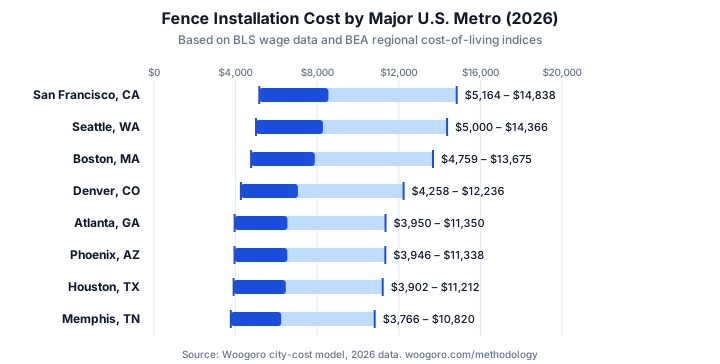
Fence labor rates vary by metro because cement and post-setting work scales with local construction wages. Below are 30 U.S. cities with their typical 150-foot 6-foot wood privacy fence range.
| City | Wood Privacy (150 LF) | vs. National Median |
|---|---|---|
| Atlanta, GA | $3,800-$7,400 | ~3% lower |
| Austin, TX | $3,900-$7,600 | at median |
| Baltimore, MD | $4,200-$8,000 | ~5% higher |
| Boston, MA | $4,800-$9,200 | ~22% higher |
| Charlotte, NC | $3,700-$7,200 | ~5% lower |
| Chicago, IL | $4,200-$8,100 | ~5% higher |
| Columbus, OH | $3,650-$7,050 | ~7% lower |
| Dallas, TX | $3,800-$7,400 | ~3% lower |
| Denver, CO | $4,150-$8,000 | ~5% higher |
| Detroit, MI | $3,750-$7,250 | ~5% lower |
| Houston, TX | $3,800-$7,400 | ~3% lower |
| Indianapolis, IN | $3,650-$7,050 | ~7% lower |
| Jacksonville, FL | $3,750-$7,250 | ~5% lower |
| Kansas City, MO | $3,650-$7,050 | ~7% lower |
| Las Vegas, NV | $3,950-$7,650 | ~2% higher |
| Los Angeles, CA | $4,800-$9,200 | ~22% higher |
| Memphis, TN | $3,500-$6,800 | ~12% lower |
| Miami, FL | $3,900-$7,500 | at median |
| Milwaukee, WI | $3,800-$7,400 | ~3% lower |
| Minneapolis, MN | $4,100-$7,950 | ~3% higher |
| Nashville, TN | $3,750-$7,250 | ~5% lower |
| New York, NY | $5,200-$9,800 | ~30% higher |
| Philadelphia, PA | $4,150-$8,000 | ~5% higher |
| Phoenix, AZ | $3,850-$7,450 | ~2% lower |
| Portland, OR | $4,200-$8,100 | ~5% higher |
| Raleigh, NC | $3,700-$7,200 | ~5% lower |
| San Antonio, TX | $3,700-$7,200 | ~5% lower |
| San Diego, CA | $4,650-$8,950 | ~18% higher |
| San Francisco, CA | $5,200-$10,000 | ~32% higher |
| Seattle, WA | $4,400-$8,500 | ~12% higher |
See fence pricing in 1,000+ U.S. cities → or browse the full fencing cost guide for material deep-dives.
How to Get the Best Fence Quote
- Measure first. Walk the perimeter and note total linear feet, slope changes, corner points, and gate locations. This is the input every contractor needs.
- Pick your top 2 materials. Get every contractor to quote both. Comparing wood-only vs. vinyl-only quotes tells you nothing about your alternatives.
- Get 3 written quotes. Itemized, on letterhead, with a quote-valid-through date. A single quote almost always means overpaying.
- Verify line items match. Same height, same post type, same gate count, same removal scope. Cheaper quotes often quietly drop one of these.
- Confirm permit and survey responsibility. The contractor pulls the permit. You provide a property line marker (or pay for a survey).
- Check the workmanship warranty. 1-year minimum, 3-year is good. No warranty means walk away.
- Pay schedule sanity-check. 25-50% deposit is normal, full payment up front is not. Final payment after the job is fully complete and you've inspected gates.
Fence Quote Red Flags
- Round-number quotes with no breakdown. "$8,000 total" hides scope omissions. Always demand line items.
- "Pull the permit yourself" requests. If the contractor wants you to pull the permit, they may not be properly licensed.
- Same-day pressure to sign. Legitimate contractors hold their price 30 days. High-pressure tactics correlate with inflated pricing.
- Cash-only or unusual payment methods. Anything that bypasses normal contractor accounting is a fraud risk.
- No physical address or only a P.O. box. Verify the company has a real local presence.
- Below-market quotes (30%+ under others). Usually missing scope, materials, or licensing.
- No proof of liability insurance. Ask for the certificate, then call the insurer to verify it's current.
Fence Permits and HOA Rules
Most U.S. cities require a permit for any fence over 6 feet tall, fences in front yards, fences on corner lots, and fences along right-of-way easements. Permit fees usually run $25-$200, processed in 1-3 weeks. The contractor should pull the permit; if they ask you to pull it, that's a licensing red flag.
Even when no permit is required, three things still bind you:
- Property line setbacks. Most cities require fences to sit 0-6 inches inside your property line. Older homes without recent surveys are at high risk of accidental encroachment.
- Easements. Utility, drainage, and access easements may run through your yard. Fences in easements can be cut down by the utility without notice.
- HOA covenants. Material, height, color, and even fence direction (which side faces out) are commonly regulated. Violations get expensive: tear-down orders are not unusual.
If you don't have a property survey from the last 5 years, paying $300-$800 for one is cheap insurance against a neighbor lawsuit. Fence-line disputes are the most common neighbor lawsuit in the U.S.
How Much Can You Save on a Fence?
Realistic savings levers, ranked by effort vs. payoff:
- Get 3 quotes (saves 10-25%). Single-quote homeowners pay ~20% above market on average. This is the highest-ROI move.
- Off-season install (saves 5-15%). November-February in temperate climates. Contractor schedules are open and per-LF rates drop.
- Pressure-treated pine instead of cedar (saves 25-40%). If you're going to paint anyway, the species doesn't matter much.
- Skip the gate count. Each gate adds $250-$600. Two gates beats four for most yards.
- DIY removal of the old fence (saves $3-$10/LF). Tear-out is straightforward; just rent a Sawzall.
- DIY staining and sealing (saves $1-$3/LF). One weekend, $200-$400 in supplies.
- Group with a neighbor. Shared fences split 50/50 can halve your cost on the property line.
- Full DIY install (saves 40-60% on a 150 LF project = $2,000-$3,500). Realistic only if you've done construction work before. Pay for a survey first.
Fence Installation FAQ
How much does fence installation cost in 2026?
Fence installation costs $4,000 to $11,500 for a typical 150-200 linear foot backyard. Wood privacy fencing averages $25 to $50 per linear foot installed, vinyl runs $30 to $60 per linear foot, and chain-link costs $15 to $25 per linear foot. Total cost depends on material, height, yard size, terrain, gate count, and local labor rates.
What is the cheapest fence to install?
Chain-link is the cheapest fencing material at $15 to $25 per linear foot installed. For a 150-foot yard, expect $2,250 to $3,750 total. Pressure-treated wood runs slightly higher at $20 to $35 per linear foot but offers more privacy. Welded wire on metal posts is even cheaper for rural or pasture use, often under $10 per linear foot.
How much does a 6-foot wood privacy fence cost per foot?
A 6-foot wood privacy fence costs $25 to $50 per linear foot installed in 2026, including posts, rails, pickets, gates, and standard labor. Cedar runs $35 to $55 per linear foot, pressure-treated pine runs $25 to $40 per linear foot, and redwood runs $40 to $60 per linear foot. Removal of an existing fence adds $3 to $5 per linear foot.
How much does vinyl fence installation cost?
Vinyl fence installation costs $30 to $60 per linear foot in 2026. A 150-foot vinyl privacy fence runs $4,500 to $9,000 installed. Vinyl costs more upfront than wood but never needs staining or sealing, and good-quality vinyl lasts 25-30 years. Lifetime cost typically beats wood for homeowners staying 10+ years.
Do I need a permit to install a fence?
Most cities require a permit for fences over 6 feet tall, fences in front yards, and fences on corner lots. Permits typically cost $25 to $200. Even when no permit is required, you must check setback rules, easements, and HOA restrictions before installing. Always have your property line surveyed if you do not have a recent survey, since fence-line disputes are the most common neighbor lawsuit.
How long does fence installation take?
A standard 150-200 foot residential fence takes 1-3 days to install with a 2-3 person crew. Wood and vinyl panel fences are fastest. Custom builds, sloped or rocky terrain, concrete-set posts that need to cure, and removal of an existing fence can extend the job to 4-7 days. Permits and inspections add 1-3 weeks to the overall timeline.
Should I install a fence myself to save money?
DIY fence installation saves 40-60% on labor but takes most homeowners 3-5 times longer than a pro crew. Realistic DIY savings on a $6,000 fence are about $2,000-$3,000. The biggest DIY mistakes are inadequate post depth, skipping concrete footings, incorrect property line setback, and underestimating gate hardware quality. If you do DIY, pay for a property survey first.
How much does it cost to remove an old fence?
Old fence removal costs $3 to $5 per linear foot for wood and vinyl, $5 to $10 per linear foot for chain-link with concrete-set posts, and $10 to $20 per linear foot for wrought iron or masonry. Disposal fees add $50 to $200 depending on dump rates. Some installers will discount removal if you also hire them for the replacement.
See if your fence quote is fair
Upload your contractor quote and we'll compare it against city wage data, flag missing scope, and tell you the realistic price range for your exact project. Free, no email required.
How We Calculate Fence Costs
Every per-linear-foot range on this page is built from three public datasets: Bureau of Labor Statistics Occupational Employment and Wage Statistics for fence-erection workers, Bureau of Economic Analysis Regional Price Parities for material adjustments, and 2026 retail material pricing from major US fence-supply distributors. Ranges represent the middle 60-70% of typical residential quotes, not extremes. Read our full methodology for details on how city multipliers are derived.