

Got a landscaping quote?
Upload it and we'll check the price against city wage data and flag missing scope items like drainage, plant warranty, or irrigation tie-ins. Free, no email.
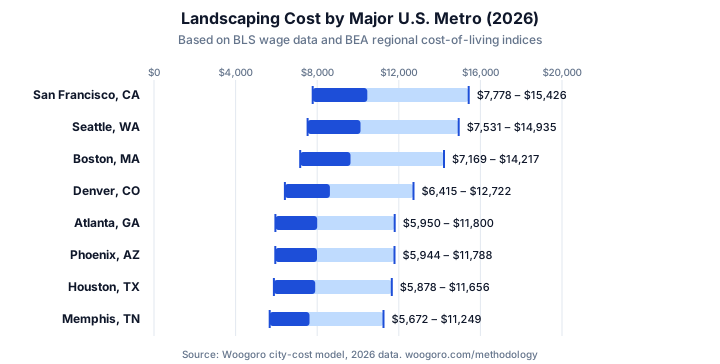
Average Landscaping Cost by Project Type (2026)
Landscaping pricing depends almost entirely on project scope. The table below shows installed cost across the most common residential project types, plus what each scope typically delivers.
| Project Type | Typical Range | Details |
|---|---|---|
| Weekly maintenance (basic mowing) | $50-$80/visit | Mow only, quarter-acre lot |
| Weekly maintenance (full service) | $100-$200/visit | Mow, edge, blow, seasonal fertilizer |
| Sod installation | $0.50-$2/sqft | Sod, soil prep, light grading, rolling |
| Hydroseeding | $0.20-$0.50/sqft | Seed, mulch, tackifier, 6-12 week establishment |
| Mulch and bed refresh | $300-$1,500 | Hardwood mulch, weed barrier, edging |
| Tree planting | $200-$2,000/tree | 15-gal to 36-inch box, includes staking |
| Paver patio | $15-$50/sqft | Concrete pavers to natural flagstone |
| Retaining wall | $25-$75/sqft face | Block, stone veneer, or natural stone |
| Walkway (paver or stone) | $15-$40/sqft | 3-4 ft wide, includes base prep |
| Fire pit (built-in) | $1,500-$6,000 | Stone or block, gas line adds $500-$1,500 |
| Outdoor kitchen | $8,000-$30,000+ | Counter, grill, sink, storage, gas/electric |
| Irrigation system (full) | $3,000-$8,000 | Spray + drip zones, controller, backflow |
| French drain | $25-$50/LF | Trench, perforated pipe, gravel, fabric |
| Yard regrading | $1,000-$3,500 | Bobcat work, fill soil, finish grading |
| Landscape design plan | $1,500-$5,000 | Independent design before quoting work |
| Full property design + install | $5,000-$50,000+ | Plants, hardscape, irrigation, lighting |
Prices include materials, labor, standard prep, and basic cleanup. Permits, design fees, plant warranty premiums, and large-tree removal are usually quoted separately.
Landscaping Cost by Lot Size
For full design-and-install projects, lot size and project intensity drive total cost more than any other factor. The table below shows typical full-property landscaping totals at common residential lot sizes.
| Lot Size | Light Refresh | Full Design + Install | Premium Build |
|---|---|---|---|
| Small (under 1/4 acre) | $2,000-$4,000 | $5,000-$15,000 | $15,000-$30,000 |
| Quarter-acre suburban | $3,000-$6,000 | $10,000-$25,000 | $25,000-$50,000 |
| Half-acre suburban | $4,000-$8,000 | $15,000-$35,000 | $35,000-$75,000 |
| 1-acre lot | $5,000-$12,000 | $20,000-$50,000 | $50,000-$120,000 |
| 2+ acre property | $8,000-$20,000 | $30,000-$80,000 | $80,000-$250,000+ |
Weekly Maintenance vs. Full Landscape Project
The two most common landscaping spends are completely different products. Maintenance is recurring per-visit pricing for upkeep. A landscape project is a one-time install with its own scope, design, and warranty. Mixing them on the same quote is the easiest way to overpay.
- Weekly maintenance ($50-$200 per visit): Mow, edge, blow, seasonal fertilizer, leaf cleanup. Look for a per-visit rate that names which services are included. Per-cut pricing without scope means edging, blowing, fertilizer, and bed weeding are extra.
- Seasonal contracts vs. month-to-month: Annual contracts at 10-15 percent below per-visit pricing make sense if you trust the company. Avoid auto-renewal clauses and any contract that bundles unrelated work like aeration, overseeding, or shrub trimming without a separate price line.
- Full-service vs. mow-only: A full-service contract on a typical quarter-acre suburban lot runs $2,000-$5,000 per year. Mow-only on the same lot runs $1,200-$2,500 per year. The full-service difference pays for fertilizer, weed control, edging, bed weeding, and seasonal cleanups.
- Project work (one-time installs): New sod, hardscape, irrigation, tree planting, drainage, and lighting are quoted by the project, not the visit. Each should have a fixed scope, line items, plant warranty, and a single completion date.
Hardscape Cost: Patios, Walkways, Walls, Fire Pits, Outdoor Kitchens
Hardscape is the highest-margin category in residential landscaping and the easiest place for quotes to drift. Get the same scope quoted in two materials so you can see the markup honestly.
- Paver patio ($15-$50/sqft installed): Concrete pavers ($15-$25/sqft) are the value choice. Brick pavers ($20-$30/sqft) cost more but resell well. Natural flagstone ($25-$40/sqft) and travertine ($30-$50/sqft) are premium. Always ask for the base depth (4 inches minimum, 6 for clay soil) and edge restraint type. Cheap quotes skimp here and the patio sinks within 3 years.
- Walkways ($15-$40/sqft): Same materials as patios but narrower, typically 3 to 4 feet wide. Curved walkways add 10-20 percent in labor.
- Retaining walls ($25-$75/sqft of face): Concrete block walls ($25-$50/sqft) are the workhorse. Stone veneer ($40-$70/sqft) and natural stone ($50-$100/sqft) cost more. Walls over 4 feet tall require an engineer-stamped design and a building permit. Drainage behind the wall (gravel and perforated pipe to daylight) is non-negotiable.
- Fire pits ($1,500-$6,000): Built-in stone or block fire pits run $2,000-$4,000 for wood-burning. Gas-line fire pits add $500-$1,500 for the line and shutoff. HOAs often have setback rules; check before pouring footings.
- Outdoor kitchens ($8,000-$30,000+): Counter, grill, sink, storage, gas line, and electrical. Premium builds with pizza oven, side burner, and refrigeration push past $30,000. Always quote the gas and electrical scope as separate line items so you can verify the licensed sub-trade.
Rule of thumb: hardscape comes with a warranty on workmanship (1 to 3 years) and a separate manufacturer warranty on the pavers themselves (often lifetime against breakage). Both should be in writing.
Softscape Cost: Plants, Mulch, Sod vs. Seed, Trees
Softscape is everything that grows. Pricing depends on plant size at install, species availability, and how much soil amendment your yard needs.
- Sod ($0.50-$2/sqft installed): Same-day green lawn. Material runs $0.35-$0.85/sqft, labor and prep add $0.50-$1.50/sqft. Fescue, bermuda, and zoysia are the most common species; cool-season vs. warm-season choice depends on your climate zone. Soil amendments and grading add $1,000-$3,000 if the yard is uneven or compacted.
- Hydroseed ($0.20-$0.50/sqft): Cheaper than sod by half but takes 6-12 weeks to establish and requires daily watering during germination. Best for large lots where the cost of sod is prohibitive.
- Plants and shrubs: 1-gallon plants run $10-$25, 5-gallon $25-$60, 15-gallon $80-$200. Beds typically need 1 plant per 3-6 square feet depending on species and design.
- Trees ($200-$2,000 per tree): 15-gallon trees run $200-$500 installed, 24-inch box runs $500-$900, 36-inch box runs $1,000-$2,000+. Larger trees give instant impact but need staking, deep watering, and 1-3 year establishment care. Avoid contractors who plant without staking or deep-watering rings.
- Mulch and bed refresh ($300-$1,500): Hardwood mulch runs $35-$50 per cubic yard delivered. A typical bed refresh covers 3-6 cubic yards plus weed barrier and crisp edging.
Plant warranty is typically 1 year on installed plants when you use a design-build firm. Get it in writing with named species. Cheap quotes substitute smaller plants of the same species or different (cheaper) species at install time.
Irrigation Cost: Drip vs. Spray, Smart Controllers
An irrigation system is the single highest-ROI add-on for a new landscape because it protects the plant investment. Skipping irrigation is the most common reason new $20,000 landscapes fail by year three.
- Spray zones for lawns ($1.50-$3/sqft of irrigated lawn): Pop-up rotary heads on a timed zone. Best for open turf areas. Wastes water on small or oddly-shaped beds.
- Drip irrigation in beds ($2-$5/sqft of bed area): Emitter tubing routes water directly to plant roots. 30-50 percent more water-efficient than spray. Right call for beds, vegetable gardens, and tree wells.
- Smart controllers ($200-$600 over a basic timer): Weather-aware and soil-moisture-aware controllers cut water use 20-40 percent and typically pay back in 2-4 years through reduced water bills. Required by code in some drought-prone states for new installs.
- Backflow preventer ($150-$400 plus annual test): Code-required in most states to prevent contamination of the potable water supply. Annual certification by a licensed tester runs $50-$120.
- Tie-in to existing system: If you already have irrigation and are adding a new bed or zone, expect $500-$2,000 in tie-in work. This is rarely included in a base landscape quote.
Always insist on a zone map (which heads are on which valve, where the controller is, where the backflow is). Without the map, future repairs are guess-and-dig.
Drainage: The Repair That Prevents Other Repairs
Standing water against the foundation, soggy lawn patches after rain, and runoff carving channels through beds are all drainage problems. Fix them before installing $20,000 of landscape on top.
- Regrading the yard ($1,000-$3,500): Bobcat work plus fill soil so the ground slopes away from the foundation 6 inches over the first 10 feet. Should be checked before any new sod or hardscape goes in.
- Gutter and downspout extensions ($200-$800): Cheapest, highest-ROI drainage fix. Extend downspouts at least 6 feet from the foundation. Splash blocks alone do not work.
- French drain ($25-$50/LF): Trench around the wet area, perforated pipe in gravel wrapped in fabric, run to daylight or a dry well. Catches subsurface water before it reaches the foundation.
- Dry well ($1,500-$4,000): Buried gravel pit that absorbs collected runoff. Useful where the yard cannot drain to daylight by gravity.
- Swales ($500-$2,500): Shallow grass-lined channels that direct surface water away from the house. Cheap, attractive, and code-friendly when sized correctly.
What Should a Landscaping Quote Include?
Itemized quotes are the only way to compare contractors fairly. Round-number quotes ("$15,000 for the backyard") hide the same scope omissions over and over. A complete landscape quote should list every line below.
- Design plan (separately quoted, or noted as homeowner-provided)
- Site prep, demo of existing landscape, and dump fees for yard waste
- Grading and soil amendments by volume (cubic yards)
- Drainage scope (regrading, French drain LF, downspout extensions, dry wells)
- Plant list with species, size, and quantity (e.g., 8x 5-gal Knockout rose)
- Tree list with species, container size, and staking method
- Sod or hydroseed square footage and species
- Mulch volume in cubic yards and type (hardwood, dyed, pine bark)
- Bed edging type (steel, paver, plastic) and linear feet
- Hardscape square footage by type, paver model, and base depth
- Retaining wall face square footage, block model, and drainage detail
- Irrigation zone count, head count, controller model, backflow preventer
- Outdoor lighting fixture count and transformer wattage
- Permits (retaining walls over 4 ft, large grading projects)
- Plant warranty terms (1 year is standard) and what voids it
- Workmanship warranty on hardscape (1-3 years standard)
- Cleanup and haul-away
Hidden Landscaping Costs Most Homeowners Miss
Landscape jobs blow budget more than most home repairs because the visible quote covers the obvious work and not the supporting work. Watch for these.
- Soil amendments and grading ($500-$3,000): New sod over compacted clay or unamended soil dies within a year. Quotes that skip soil testing and amendments are cutting corners that show up at month 12.
- Irrigation tie-in to existing system ($500-$2,000): If you already have irrigation and are extending a new zone, the tie-in work is rarely in the base quote.
- Plant warranty premium ($300-$1,500): Most warranties cover replacement plants but charge for installation labor. Read the warranty before assuming a 1-year warranty is free replacement.
- Tree-removal certificates ($75-$300): Some HOAs and many municipalities require a certificate before removing a tree over a certain trunk diameter, especially heritage species.
- Permits for retaining walls over 4 feet ($150-$800 plus engineering $1,500-$5,000): Skipping the permit can mean tear-down by code enforcement.
- Dump fees for yard waste ($50-$400): Some quotes assume homeowner provides dumpster or curbside pickup. Confirm in writing.
- Underground utility marking: Free 811 call required before any digging. Strikes on unmarked private lines (irrigation, low-voltage lighting, propane) are at homeowner risk if not flagged in writing.
- Mulch volume miscalculation: A typical bed needs 3 inches of mulch (1 cubic yard covers ~108 sqft at that depth). Quotes that under-specify volume mean a thinner, faster-eroding mulch layer.
- Lawn establishment irrigation: New sod needs daily watering for 2-3 weeks. If your house has no irrigation, plan on $50-$150 in hose timers and sprinklers, plus a higher water bill that month.
Landscaping Cost by City
Landscaping labor rates vary by metro because grounds-maintenance and hardscape labor scale with local construction wages. The table below shows the typical full design-and-install range for a quarter-acre suburban lot in each city, plus the variance vs. the U.S. median.
| City | Typical Design + Install (1/4 acre) | vs. National Median |
|---|---|---|
| Atlanta, GA | $9,700-$24,250 | ~3% lower |
| Austin, TX | $10,000-$25,000 | at median |
| Baltimore, MD | $10,500-$26,250 | ~5% higher |
| Boston, MA | $12,200-$30,500 | ~22% higher |
| Charlotte, NC | $9,500-$23,750 | ~5% lower |
| Chicago, IL | $10,500-$26,250 | ~5% higher |
| Columbus, OH | $9,300-$23,250 | ~7% lower |
| Dallas, TX | $9,700-$24,250 | ~3% lower |
| Denver, CO | $10,500-$26,250 | ~5% higher |
| Detroit, MI | $9,500-$23,750 | ~5% lower |
| Houston, TX | $9,700-$24,250 | ~3% lower |
| Indianapolis, IN | $9,300-$23,250 | ~7% lower |
| Jacksonville, FL | $9,500-$23,750 | ~5% lower |
| Kansas City, MO | $9,300-$23,250 | ~7% lower |
| Las Vegas, NV | $10,200-$25,500 | ~2% higher |
| Los Angeles, CA | $12,200-$30,500 | ~22% higher |
| Memphis, TN | $8,800-$22,000 | ~12% lower |
| Miami, FL | $10,000-$25,000 | at median |
| Milwaukee, WI | $9,700-$24,250 | ~3% lower |
| Minneapolis, MN | $10,300-$25,750 | ~3% higher |
| Nashville, TN | $9,500-$23,750 | ~5% lower |
| New York, NY | $13,000-$32,500 | ~30% higher |
| Philadelphia, PA | $10,500-$26,250 | ~5% higher |
| Phoenix, AZ | $9,800-$24,500 | ~2% lower |
| Portland, OR | $10,500-$26,250 | ~5% higher |
| Raleigh, NC | $9,500-$23,750 | ~5% lower |
| San Antonio, TX | $9,500-$23,750 | ~5% lower |
| San Diego, CA | $11,800-$29,500 | ~18% higher |
| San Francisco, CA | $13,200-$33,000 | ~32% higher |
| Seattle, WA | $11,200-$28,000 | ~12% higher |
See landscaping pricing in 1,000+ U.S. cities → or browse the full landscaping cost guide for material deep-dives.
How to Get the Best Landscaping Quote
- Map your scope first. Walk the lot and write down what you want done: maintenance, sod, plants, hardscape, irrigation, drainage, lighting. Measure square footage where you can. This is the input every contractor needs.
- For projects over $10,000, pay for an independent design plan. $1,500 to $5,000 to a designer who has no contractor relationship. The plan locks scope so all three bids quote the same project.
- Get 3 written quotes from licensed landscapers. Itemized, on letterhead, with a quote-valid-through date. Round-number quotes always overpay.
- Verify line items match. Same plant species and sizes, same hardscape square footage and paver model, same irrigation zone count, same drainage scope. Cheaper quotes substitute smaller plants or skip drainage.
- Confirm permits and HOA approval up front. Retaining walls over 4 feet need a permit. HOA-controlled neighborhoods often pre-approve plant lists, fence heights, hardscape colors. Get the approval letter before signing.
- Check the plant warranty in writing. 1 year on installed plants is standard. Read what voids it (drought stress, deer browsing, no homeowner watering log).
- Pay schedule sanity-check. 25-50 percent deposit is normal. Anything over 50 percent up front, or full payment before completion, is a red flag.
- Walk the job before final payment. Confirm plant count and sizes match the spec, irrigation zones each turn on, hardscape pavers are level and edge-restrained, mulch volume looks right.
Landscaping Quote Red Flags
- Per-cut pricing without scope language. "$50 a cut" tells you nothing about whether edging, blowing, fertilizer, and beds are included. Demand a scope list.
- No soil testing on a new lawn install. Sod or seed over compacted, unamended, or wrong-pH soil dies. A contractor who skips a $50 soil test is cutting a corner that will cost you the entire lawn.
- No plant warranty. Reputable design-build firms warranty plants 1 year. No warranty means walk away.
- Lowballing on materials and substituting at install. Cheaper quotes win the bid by speccing 5-gallon shrubs, then plant 1-gallon at install. Insist on plant size in the quote and verify at delivery.
- Weekly maintenance contracts with auto-renewal. Year-long auto-renewal locks you in even if service quality drops. Insist on month-to-month or season-to-season terms.
- Designs without plant zone consideration. A designer who specs zone-7 plants in a zone-9 yard is selling you a slow-motion plant graveyard. Confirm the designer knows your USDA zone.
- Retaining wall over 4 feet without engineering. Unpermitted, unengineered tall walls fail and can injure people. Walk away from any contractor offering this.
- Cash-only or unusual payment methods. Anything that bypasses normal contractor accounting is a fraud and warranty-enforcement risk.
- Below-market quotes (30%+ under others). Usually means smaller plants, no drainage, no permits, or unlicensed labor.
Permits, HOA Rules, and Plant Zones
Most landscape work needs no permit, but a handful of common projects do. The contractor should pull any required permits in their name; if they ask the homeowner to pull, that is a licensing red flag.
- Retaining walls over 4 feet tall require a building permit and an engineer-stamped design in most U.S. cities. Permit fees $150-$800, engineering $1,500-$5,000.
- Tree removal over a certain trunk diameter (often 8-12 inches) requires a permit or arborist letter in many cities, especially for heritage species.
- Major regrading or fill on properties near floodplains or in jurisdictions with strict stormwater rules may need a grading permit ($100-$500).
- Outdoor kitchens with gas line need a plumbing permit and licensed gas-line work.
- Outdoor lighting on a new circuit needs an electrical permit and licensed electrical work.
- HOA covenants are the most common non-permit constraint. Plant species lists, hardscape colors, fence heights, and even mulch type are commonly regulated. Get the HOA architectural-review approval letter in hand before signing the contractor.
- USDA plant hardiness zones determine what plants will actually survive in your yard. Confirm the designer is speccing plants in your zone, not the brochure plants from a different climate.
How Much Can You Save on Landscaping?
Realistic savings levers, ranked by effort vs. payoff:
- Get 3 quotes (saves 10-25%). Single-quote homeowners pay roughly 20 percent above market on average for landscape work. Highest-ROI move.
- Phase the project (saves 20-30% in carrying cost). Year 1: drainage and grading. Year 2: hardscape. Year 3: plants and irrigation. Phasing lets the soil settle and gives you time to learn the yard.
- Choose smaller plants (saves 30-50% on plant cost). 5-gallon shrubs catch up to 15-gallon shrubs in 2-3 years. Trees are the exception; large trees give immediate impact.
- DIY mulch and bed refresh (saves $300-$1,200 per year). 3-6 cubic yards delivered, one weekend, $200-$400 in materials.
- DIY plant install with pro-installed hardscape and irrigation. The high-skill work (drainage, walls, irrigation) goes to the pro. The low-skill work (planting, mulching, edging) is yours.
- Off-season install (saves 5-15%). Late fall and winter (in non-frost regions) usually have softer pricing and faster scheduling.
- Skip the design-build markup if scope is simple. A clear-scope project with no major hardscape or drainage does not need a $3,000 design plan.
- Negotiate plant warranty separately. Some firms will discount the install price 5-10 percent if you waive the 1-year plant warranty.
Landscaping FAQ
How much does landscaping cost in 2026?
Landscaping costs $50 to $200 per visit for weekly maintenance and $5,000 to $50,000+ for full design and install in 2026. Sod installation runs $0.50 to $2 per square foot, hardscape (patios, walls, walkways) runs $15 to $50 per square foot, irrigation systems run $3,000 to $8,000, and tree planting runs $200 to $2,000 per tree. Total project cost depends on lot size, terrain, plant choices, hardscape scope, and local labor rates.
How much does weekly lawn maintenance cost?
Weekly lawn maintenance costs $50 to $200 per visit in 2026. Basic mowing on a quarter-acre lot runs $50 to $80 per visit. Full-service maintenance with mowing, edging, blowing, and seasonal fertilizer runs $100 to $200 per visit. Annual full-service contracts on a typical suburban lot total $2,000 to $5,000 per year. Per-cut pricing without scope language usually means edging, blowing, and beds are extra.
How much does sod installation cost?
Sod installation costs $0.50 to $2 per square foot in 2026 (sod material $0.35 to $0.85 per square foot plus labor and prep). For a typical 5,000 square foot lawn, expect $2,500 to $10,000 installed. Hydroseeding is cheaper at $0.20 to $0.50 per square foot but takes 6 to 12 weeks to fully establish vs. same-day for sod. Soil amendments and grading add $1,000 to $3,000 if the existing yard needs leveling.
How much does a paver patio cost?
Paver patios cost $15 to $50 per square foot installed in 2026. A standard 200-square-foot paver patio runs $3,000 to $10,000. Concrete pavers run $15 to $25 per square foot, brick pavers run $20 to $30 per square foot, natural flagstone runs $25 to $40 per square foot, and travertine pavers run $30 to $50 per square foot. Add 10 to 20 percent for complex patterns, soldier-course borders, or curves.
How much does a retaining wall cost?
Retaining walls cost $25 to $75 per face square foot installed in 2026. Concrete block walls run $25 to $50 per square foot, stone veneer walls run $40 to $70 per square foot, and natural stone walls run $50 to $100 per square foot. Walls over 4 feet tall require an engineer-stamped design and a permit, adding $1,500 to $5,000 to the project. Drainage behind the wall (gravel and perforated pipe) is required and is not always quoted.
How much does an irrigation system cost?
A residential irrigation system costs $3,000 to $8,000 installed in 2026 for a typical quarter-acre lot. Drip irrigation in beds runs $2 to $5 per square foot of bed area. Spray-zone systems for lawns run $1.50 to $3 per square foot of irrigated lawn. Smart controllers (weather and soil-moisture aware) add $200 to $600 over a basic timer and typically pay back in 2 to 4 years through reduced water use.
How much does professional landscape design cost?
Landscape design plans cost $1,500 to $5,000 for a residential property in 2026. Most designers credit the design fee toward installation if you hire them to build it. Design-build firms charge 10 to 20 percent above install-only firms but provide cohesive plans. For complex projects (major hardscape, drainage, lighting, irrigation), the design fee almost always pays back in avoided rework and missed scope.
When is the best time to landscape?
Spring (March to May) and fall (September to October) are best for plants and sod in most climates. Hardscape (paver patios, walls, irrigation) can be done year-round in non-freezing climates, or April to November in cold climates. Many landscapers offer 10 to 20 percent off-season discounts in winter months in temperate regions.
See if your landscape quote is fair
Upload your contractor quote and we'll compare it against city wage data, flag missing scope, and tell you the realistic price range for your exact project. Free, no email required.
How We Calculate Landscaping Costs
Every per-project and per-city range on this page is built from three public datasets: Bureau of Labor Statistics Occupational Employment and Wage Statistics for landscapers and grounds maintenance workers, Bureau of Economic Analysis Regional Price Parities for material adjustments, and 2026 retail material pricing from major U.S. nursery and hardscape distributors. Ranges represent the middle 60-70 percent of typical residential quotes, not the extremes. Read our full methodology for details on how city multipliers are derived.