

Got a foundation repair quote?
Upload it and we'll check the price against city wage data and flag missing scope items like engineering sign-off, pier count, or warranty terms. Free, no email.
Average Foundation Repair Cost by Type (2026)
Foundation repair pricing is dominated by the repair method, not the home's square footage. The table below shows installed cost by repair type, plus what each method actually fixes and what it does not.
| Repair Type | Typical Range | Best For |
|---|---|---|
| Crack injection (epoxy/polyurethane) | $250-$800 per crack | Hairline cosmetic cracks in poured concrete |
| Slabjacking / Mudjacking | $500-$1,500 | Lifting a sunken slab section, driveways, sidewalks |
| Polyurethane foam injection | $1,200-$3,500 | Slab leveling with lighter, longer-lasting fill |
| Helical pier (per pier) | $1,500-$2,500 | Lighter loads, additions, porches, light commercial |
| Push pier (per pier) | $1,800-$3,000 | Settling load-bearing walls on heavier homes |
| Carbon fiber wall straps | $400-$700 per strap | Bowing block walls, non-structural reinforcement |
| Steel I-beam wall stabilization | $700-$1,200 per beam | Severe wall bowing, structural reinforcement |
| Wall anchor system | $600-$1,000 per anchor | Bowing walls when yard access allows tieback |
| Drainage correction (French drain) | $2,000-$6,000 | Stopping water from causing further movement |
| Exterior waterproofing | $5,000-$15,000 | Wet basements, full perimeter excavation |
| Full underpinning | $15,000-$26,000 | Severe whole-house settlement, 8-12 piers |
Prices include materials, labor, standard excavation, and backfill. Engineering reports, permits, plumbing rerouting, and finish repair are usually quoted separately.
Foundation Repair Cost by Severity
The biggest cost driver is how far the foundation has moved. Catching a problem in the cosmetic-crack stage is roughly one-tenth the cost of catching it after walls have started bowing or settling.
| Severity | Typical Total | Symptoms |
|---|---|---|
| Cosmetic / hairline | $500-$1,500 | Vertical hairline cracks under 1/8", no door issues |
| Minor settlement | $2,500-$6,000 | One sticking door, small stair-step cracks, isolated slab dip |
| Moderate settlement | $6,000-$15,000 | Multiple sticking doors, gaps at crown molding, sloped floors, 4-6 piers needed |
| Severe settlement | $15,000-$26,000 | Visible separation, horizontal cracks, 8-12 piers + drainage |
| Catastrophic | $26,000-$60,000+ | Whole-house underpinning, structural reframing, foundation replacement |
Push Piers vs. Helical Piers: Which Do You Actually Need?
Piering is the most common foundation repair for homes with active settlement, and the choice between push and helical piers is the single biggest line item in your quote. They are not interchangeable.
- Push piers ($1,800-$3,000 per pier): Hydraulically driven straight down through load-bearing soil layers using the weight of the home as resistance. Reach deeper, more stable strata (often 20-50+ feet). Best for heavier homes with at least one full story of structure pressing down. Standard for two-story masonry or brick homes with active settlement.
- Helical piers ($1,500-$2,500 per pier): Large steel screws torqued into the ground with a hydraulic motor until reaching torque-verified bearing capacity. Install faster, less excavation, and work where the structure is too light to drive a push pier (porches, additions, slab-on-grade homes, light commercial buildings). Common for new construction underpinning.
- Pier count is driven by load, not square footage. The engineer specifies pier spacing along load-bearing walls (typically 6-8 feet apart). A 1,500 square foot ranch and a 2,500 square foot ranch may need the same pier count if both have similar load-bearing wall length.
- Both should be paired with brackets rated for the load. Cheaper quotes often spec smaller brackets that get pulled apart over time. Insist on the bracket model number in writing.
For a typical 6-pier project: helical piers run $9,000-$15,000, push piers run $10,800-$18,000. The price gap usually buys you a deeper, more permanent fix. If your engineer specs push piers, do not let a contractor talk you into helicals to save money.
Slabjacking vs. Polyurethane Foam Injection
For a sunken slab (driveway dip, garage floor settlement, isolated interior slab dip), there are two competing methods. They both lift the slab back to grade. They differ in fill material, durability, and price.
- Slabjacking / Mudjacking ($500-$1,500): Pumps a cement-and-soil slurry under the slab through 1-2" holes. Cheap and proven, but the slurry is heavy (which can re-settle the soil) and entry holes are visible. Best for low-traffic areas like garage slabs and driveways.
- Polyurethane foam injection ($1,200-$3,500): Pumps expanding two-part polyurethane through 5/8" holes. Foam weighs ~2 pounds per cubic foot vs. 100+ pounds for slurry, so it does not re-compress the soil. Cures in minutes, smaller holes, longer expected lifespan. The pricier choice but the better choice for interior slabs and finished spaces.
- Neither fixes the underlying cause. If the soil keeps moving, the slab will settle again. Always pair slab lifting with drainage correction or you will be paying for it twice.
Wall Stabilization: Carbon Fiber vs. Steel Beams vs. Wall Anchors
For bowing or cracking basement walls (most common in concrete block construction with hydrostatic pressure from the outside soil), there are three competing fixes. Your engineer will spec one based on how far the wall has moved.
- Carbon fiber straps ($400-$700 per strap, $4,000-$8,000 typical job): Vertical fiber strips epoxied floor-to-ceiling on the interior face. Stops further inward movement. Will not push a bowed wall back. Use only when wall deflection is under 2 inches and there is no active outward pressure increase.
- Steel I-beam stabilization ($700-$1,200 per beam, $7,000-$12,000 typical job): Vertical steel I-beams anchored to the floor joists above and resisting wall pressure. Stronger than carbon fiber. Visible in the basement. Right call for walls bowed 2-4 inches or with active movement.
- Wall anchor systems ($600-$1,000 per anchor, $6,000-$10,000 typical job): Steel rods drilled through the wall, connected to plates buried in the yard outside. Tightening the anchor pulls the wall back toward plumb over weeks or months. Requires yard access and undisturbed soil 10+ feet from the foundation. Best non-excavation option for restoring wall position, not just stopping movement.
Severe bowing (4+ inches) usually requires excavation and full wall rebuild, not stabilization. If a contractor offers carbon fiber on a heavily bowed wall, get a second engineering opinion.
Drainage Correction: The Repair That Prevents the Other Repairs
Roughly two-thirds of residential foundation movement is caused by water. Soil expands when wet and shrinks when dry. Repeated cycles of expansive clay against a foundation will eventually crack or settle it. Fixing drainage is what makes the rest of the repair last.
- Regrading the yard ($1,500-$4,000): Adding soil so the ground slopes away from the foundation 6 inches over the first 10 feet. Should be the first thing checked. Often DIY-able if access allows.
- Gutter and downspout extensions ($200-$800): Cheapest, highest-ROI drainage fix. Extend downspouts at least 6 feet from the foundation. Skip the splash blocks; they do not work.
- French drain (interior) ($2,500-$6,000): Trench around the basement perimeter on the inside, gravel and perforated pipe to a sump pump. Catches water that has already gotten under the slab.
- Exterior waterproofing ($5,000-$15,000): Excavate the foundation perimeter, apply waterproof membrane, install exterior French drain. The most thorough and most expensive fix. Required when the basement is finished and you cannot tolerate any moisture intrusion.
- Sump pump installation ($800-$2,000): Where water has nowhere to drain by gravity. Get a battery backup; sump failures during storms cause flooded basements.
What Should a Foundation Repair Quote Include?
Itemized quotes are the only way to compare contractors fairly. Round-number quotes ("$15,000 for the whole job") hide the same scope omissions over and over. A complete foundation repair quote should list every line below.
- Independent structural engineer report and sign-off (or note that homeowner provides one)
- Pier type (push or helical), pier count, and minimum depth
- Bracket model and load rating
- Excavation, dewatering, and backfill
- Concrete cutting and patching (interior piers)
- Plumbing protection or rerouting plan if pipes run near pier locations
- Wall stabilization specs (carbon fiber model, beam size, anchor count)
- Slab lifting method (slurry vs. polyurethane) and fill volume estimate
- Drainage system (gutters, downspouts, French drain, sump pump as applicable)
- Permit pulled by contractor
- Post-repair monitoring schedule (typically 30/60/90 day check-ins)
- Workmanship warranty (1-3 years on labor, separate from product warranty)
- Product warranty on piers (manufacturer's, often lifetime, must be in writing)
- Transferability of warranty to next homeowner (yes/no, conditions)
- Landscaping restoration (replacing shrubs, sod, mulch removed for excavation)
- Interior finish repair scope (drywall, paint, trim) or explicit exclusion
- Cleanup and haul-away of excavated soil and debris
Hidden Foundation Repair Costs Most Homeowners Miss
Foundation jobs blow budget more than any other home repair because the visible price covers the structural work but not the supporting work. Watch for these.
- Structural engineer report ($400-$1,200): Almost never bundled into the contractor's quote. Pay for this separately and independently before any contractor visits, or you are letting the contractor diagnose the problem they will sell you the fix for.
- Soil testing ($300-$1,500): Required for new construction underpinning and for warranty validity on some helical pier systems. Often skipped; sometimes that is fine, sometimes not.
- Plumbing rerouting ($1,500-$8,000): If push piers go in near supply or drain lines and a pipe breaks during installation, the homeowner usually owns the bill. Ask up front who is liable if a line breaks.
- Landscaping restoration ($500-$4,000): Excavation removes shrubs, sod, mulch, and irrigation lines. Restoration is rarely included in the base price.
- Stucco, brick, or veneer repair ($800-$5,000): Exterior waterproofing requires removing siding or stucco at grade. Patching back to match is a separate trade and a separate bill.
- Interior finish repair ($500-$5,000): Drywall cracks above doorways often reopen during piering as the home is re-leveled. Quotes almost never cover this; it is a separate drywall and paint job after the foundation work cures.
- Concrete cutting and patching ($300-$1,200): Interior piers require cutting through the slab. Patching back to a finished surface (epoxy, stain, tile match) is often quoted separately.
- Permit fees ($150-$800): Larger jobs often require structural permits. Some contractors leave this off and ask the homeowner to pull it.
- Inspection callback fees: Some warranty programs charge for callbacks if the issue turns out to be unrelated drainage or settlement.
Foundation Repair Cost by City
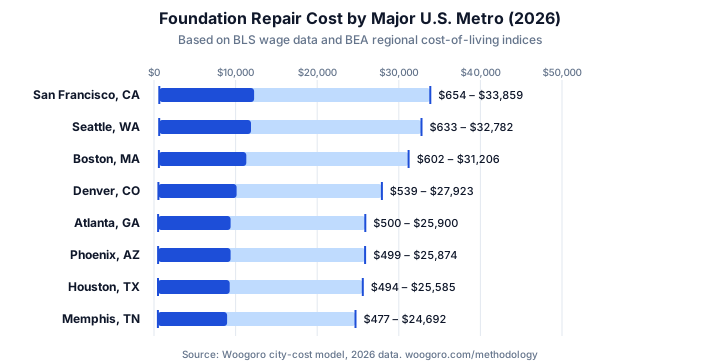
Foundation labor rates vary by metro because excavation, concrete, and engineering scale with local construction wages. The table below shows the typical mid-job cost range (the $5,000-$10,000 national-median band) adjusted for each city, plus the variance vs. the U.S. median. Click any city for full local pricing.
| City | Typical Mid-Job | vs. National Median |
|---|---|---|
| Atlanta, GA | $4,850-$9,700 | ~3% lower |
| Austin, TX | $5,000-$10,000 | at median |
| Baltimore, MD | $5,250-$10,500 | ~5% higher |
| Boston, MA | $6,100-$12,200 | ~22% higher |
| Charlotte, NC | $4,750-$9,500 | ~5% lower |
| Chicago, IL | $5,250-$10,500 | ~5% higher |
| Columbus, OH | $4,650-$9,300 | ~7% lower |
| Dallas, TX | $4,850-$9,700 | ~3% lower |
| Denver, CO | $5,250-$10,500 | ~5% higher |
| Detroit, MI | $4,750-$9,500 | ~5% lower |
| Houston, TX | $4,850-$9,700 | ~3% lower |
| Indianapolis, IN | $4,650-$9,300 | ~7% lower |
| Jacksonville, FL | $4,750-$9,500 | ~5% lower |
| Kansas City, MO | $4,650-$9,300 | ~7% lower |
| Las Vegas, NV | $5,100-$10,200 | ~2% higher |
| Los Angeles, CA | $6,100-$12,200 | ~22% higher |
| Memphis, TN | $4,400-$8,800 | ~12% lower |
| Miami, FL | $5,000-$10,000 | at median |
| Milwaukee, WI | $4,850-$9,700 | ~3% lower |
| Minneapolis, MN | $5,150-$10,300 | ~3% higher |
| Nashville, TN | $4,750-$9,500 | ~5% lower |
| New York, NY | $6,500-$13,000 | ~30% higher |
| Philadelphia, PA | $5,250-$10,500 | ~5% higher |
| Phoenix, AZ | $4,900-$9,800 | ~2% lower |
| Portland, OR | $5,250-$10,500 | ~5% higher |
| Raleigh, NC | $4,750-$9,500 | ~5% lower |
| San Antonio, TX | $4,750-$9,500 | ~5% lower |
| San Diego, CA | $5,900-$11,800 | ~18% higher |
| San Francisco, CA | $6,600-$13,200 | ~32% higher |
| Seattle, WA | $5,600-$11,200 | ~12% higher |
See foundation repair pricing in 1,000+ U.S. cities → or browse the full cost guide library.
How to Get the Best Foundation Repair Quote
- Get an independent engineering inspection first. $400 to $1,200 to a licensed structural engineer who has no contractor relationship. The report names the cause and the required fix. Without it, you are letting the contractor sell you their own diagnosis.
- Pull 3 written quotes from foundation specialists. Not general contractors. Foundation work has its own equipment, training, and warranty programs. A roofer-turned-piering-installer is the wrong call.
- Itemize, on letterhead, with a quote-valid-through date. Pier type, pier count, depth, brackets, excavation scope, drainage, warranty, engineering sign-off. No round numbers.
- Verify line items match. All three quotes must specify the same pier count and same minimum depth. Cheaper quotes often quietly drop a pier or use lighter brackets.
- Confirm warranty in writing. Transferability, exclusions (drainage failure, additions, soil change), and whether the warranty company is independent or contractor-owned.
- Verify license, bonding, and insurance. Ask for the certificates and call the insurer to confirm coverage is current.
- Pay schedule sanity-check. 25-50% deposit is normal. Anything over 50% up front, or full payment before completion, is a red flag.
- Walk the job before final payment. Confirm pier count matches the quote, brackets are visible, and engineering sign-off is in your hand.
Foundation Repair Quote Red Flags
- "Lifetime transferable warranty" with fine-print escape clauses. Read the warranty before signing. Many void on home sale, on yard regrading, on additions, or if the homeowner skips an annual inspection. A warranty that voids on the things that normally happen is not really a warranty.
- No engineering report required. Any contractor who will quote without an independent engineer signing off on cause and remedy is selling you a product, not a fix.
- Refusal to test soil or skip a soil bearing report. On larger jobs and in expansive-clay regions, soil bearing capacity drives pier depth. Skipping it is a tell.
- Confusing settling cracks with structural cracks. Vertical hairline cracks under 1/8 inch are usually cosmetic. A contractor who tries to sell $20,000 of piers for cosmetic settling is overselling. A contractor who dismisses horizontal or stair-step cracks is underselling.
- Door-knockers after a heavy rain or storm. Storm-chaser foundation crews follow weather events looking for vulnerable homeowners. Reputable foundation companies do not knock on doors.
- Same-day pressure to sign. Legitimate contractors hold pricing 30 days. Foundation work is a 4 to 6 week project anyway; there is no rush.
- Cash-only pricing or unusual payment methods. Foundation jobs are five-figure projects. Anything that bypasses normal accounting is fraud risk.
- Below-market quote (30%+ under others). Usually means missing pier count, lighter brackets, or unlicensed labor.
- "We use our own engineer." Contractor-employed engineers have a clear conflict. Always pay independently for the inspection.
Permits, Engineering Reports, and Insurance
Most U.S. cities require a structural permit for foundation underpinning, wall stabilization, and any work that alters load paths. Permit fees usually run $150 to $800 with a 1 to 4 week review. The contractor should pull the permit; if they ask the homeowner to pull it, that is a licensing red flag.
Beyond the permit, three things are non-negotiable on any meaningful foundation job:
- Independent structural engineer report. A licensed PE inspects, names the cause (soil movement, drainage, plumbing leak, expansive clay, settling fill), and specifies the required fix. Pay $400-$1,200 for this independently before any contractor visits. Reuse the same report when collecting quotes.
- Engineering sign-off after work completes. The engineer (or a different licensed PE) confirms the work matches the spec. This is what makes the warranty meaningful and the work disclosable on a future sale.
- Most foundation issues are NOT covered by homeowners insurance. Gradual settling, soil movement, expansive clay, poor drainage, and tree-root damage are explicitly excluded by virtually every standard policy. Coverage typically only applies to sudden accidental causes, like a burst water line under the slab causing rapid undermining. Even then, the policy usually pays to fix the leak and resulting damage, not to underpin the foundation. Read the dwelling exclusions section before assuming any coverage.
If you are buying a home with a documented foundation repair, request the engineering sign-off, the warranty document, and the warranty transfer paperwork before close. If any of those is missing, the warranty is essentially worthless.
How Much Can You Save on Foundation Repair?
Realistic savings levers, ranked by effort vs. payoff:
- Get an independent engineer first (saves 10-30%). Eliminates oversold pier counts and prevents getting talked into a more expensive method than the situation requires. Highest-ROI move.
- Get 3 quotes (saves 10-25%). Single-quote homeowners pay roughly 20% above market on average for foundation work.
- Fix drainage first when possible (saves 50%+ on pier count). Regrading, gutter extensions, and downspout extensions are cheap. Many borderline cases stabilize after drainage is corrected, avoiding piering entirely.
- Skip cosmetic finish repair from the foundation contractor. Drywall and paint are cheaper from a separate finisher. Foundation crews often mark up finish work 30-50%.
- Off-season scheduling (saves 5-10%). Late fall and winter (in non-frost regions) usually have more contractor availability and softer pricing.
- DIY landscaping restoration (saves $500-$3,000). Replanting shrubs and laying sod after excavation is straightforward.
- Bundle slab lifting with piering. If both are needed, bundling usually saves 10-15% over separate trips.
Foundation Repair FAQ
How much does foundation repair cost in 2026?
Foundation repair costs $500 to $26,000 in 2026 depending on damage severity and repair method. Most homeowners spend $5,000 to $10,000 on a typical mid-job. Minor crack repair runs $250 to $800 per crack. Push pier installation averages $1,800 to $3,000 per pier with 6 to 12 piers typical per project. Wall stabilization runs $4,000 to $12,000, and full underpinning ranges $15,000 to $26,000.
How do I know if my foundation needs repair?
Watch for stair-step cracks in brick or block walls, doors and windows that suddenly stick or won't latch, gaps between walls and ceiling crown molding, sloping or sagging floors, horizontal cracks in basement walls, and water pooling against the foundation after rain. Hairline vertical cracks under 1/8 inch are usually cosmetic settling. Horizontal cracks, stair-step cracks wider than 1/4 inch, or any cracks paired with sticking doors warrant a structural engineer inspection.
What is the cheapest foundation repair?
Epoxy or polyurethane crack injection is the cheapest foundation repair at $250 to $800 per crack, suitable for non-structural hairline cracks in poured concrete walls. Slabjacking (mudjacking) to lift a sunken slab section runs $500 to $1,500. These are bandaid solutions only when the underlying cause is benign. If your foundation is settling because of soil movement, piering is the only durable fix and crack injection alone will fail within a year or two.
How much does pier installation cost per pier?
Steel push piers cost $1,800 to $3,000 per pier installed in 2026. Helical (screw-in) piers cost $1,500 to $2,500 per pier and are common for lighter loads or new construction. A typical residential underpinning project uses 6 to 12 piers, putting the total at $11,000 to $36,000. Pier count is driven by load-bearing wall length and soil bearing capacity, not the home's square footage.
Does homeowners insurance cover foundation repair?
Most foundation repair is NOT covered by standard homeowners insurance. Gradual settling, soil movement, expansive clay, poor drainage, and tree-root damage are explicitly excluded by virtually every policy. Coverage typically only kicks in for sudden, accidental causes, such as a burst water line under the slab causing rapid undermining, or impact damage from a vehicle. Even then, the policy usually pays to fix the leak and resulting damage, not to underpin the foundation. Always read the dwelling exclusions section before assuming coverage.
How long does foundation repair take?
A typical residential pier installation takes 2 to 5 days for 6 to 12 piers. Slabjacking is a 1-day job. Wall stabilization with carbon fiber straps takes 1 to 2 days, while steel I-beam stabilization takes 3 to 5 days. Drainage correction and exterior waterproofing add 3 to 7 days. Engineering inspection, permits, and scheduling typically add 2 to 4 weeks before work starts. Plan for a 4 to 6 week total timeline from the first crack you notice to project completion.
Should I repair my foundation before selling my house?
In most cases, yes. Visible foundation issues are a top buyer-killer and lenders may refuse to underwrite homes with active settlement or structural cracks. A repaired foundation with a transferable warranty and engineering sign-off typically returns 80 to 100 percent of its cost in higher sale price and faster close. Selling 'as-is' usually means a 10 to 20 percent price haircut plus a much smaller buyer pool. The exception is if you have a cash investor buyer already lined up at a known discount.
What's the difference between push piers and helical piers?
Push piers are hydraulically driven straight down into load-bearing soil using the weight of the house as resistance. They are best for heavier homes with at least one full story above the foundation and reach the deepest, most stable soil. Helical piers are large steel screws torqued into the ground with a hydraulic motor. They install faster, work for lighter structures (porches, additions, light commercial), and can be installed where there is not enough house weight to drive a push pier. Push piers cost $1,800 to $3,000 each, helical piers $1,500 to $2,500 each.
See if your foundation quote is fair
Upload your contractor quote and we'll compare it against city wage data, flag missing scope, and tell you the realistic price range for your exact project. Free, no email required.
How We Calculate Foundation Repair Costs
Every per-repair and per-city range on this page is built from three public datasets: Bureau of Labor Statistics Occupational Employment and Wage Statistics for construction, excavation, and structural-steel workers, Bureau of Economic Analysis Regional Price Parities for material adjustments, and 2026 retail material pricing from major U.S. foundation-supply distributors and pier manufacturers. Ranges represent the middle 60-70% of typical residential quotes, not the extremes. Read our full methodology for details on how city multipliers are derived.