

How Much Does Moving Cost?
Complete 2026 pricing for local and long-distance moves, packing services, special items, storage, and the fees movers love to hide in the fine print.
Local Move Costs by Home Size (2026)
Local moves are generally defined as anything under 50 miles. Movers charge by the hour and the final cost depends on how much stuff you have, how many flights of stairs are involved, and how far the truck needs to travel.
| Home Size | Price Range | Typical Hours |
|---|---|---|
| Studio / Small 1BR | $300–$600 | ~3 hours |
| 1 Bedroom | $400–$800 | ~4 hours |
| 2 Bedrooms | $600–$1,200 | ~5 hours |
| 3 Bedrooms | $900–$1,800 | ~7 hours |
| 4+ Bedrooms | $1,200–$2,500 | ~9 hours |
These ranges assume a crew of 2–3 movers with a truck and standard access (ground floor or one flight of stairs). Add 10–25% for weekend or peak season moves (May through September).
Long-Distance Move Costs (2026)
Long-distance moves (over 50 miles or across state lines) are priced by weight and distance rather than by the hour. The table below shows typical ranges for each combination of home size and distance bracket.
| Home Size | Est. Weight | Under 250 mi | 250–500 mi | 500–1,000 mi | Cross-Country |
|---|---|---|---|---|---|
| 1 Bedroom | ~2,000 lbs | $1,500–$3,000 | $2,000–$4,000 | $2,500–$5,500 | $3,000–$6,000 |
| 2 Bedrooms | ~5,000 lbs | $2,000–$4,000 | $3,000–$5,500 | $3,500–$6,500 | $4,500–$8,000 |
| 3 Bedrooms | ~8,000 lbs | $2,500–$5,000 | $3,500–$6,500 | $5,000–$8,000 | $6,000–$10,000 |
| 4+ Bedrooms | ~12,000 lbs | $3,500–$6,500 | $5,000–$8,500 | $6,500–$10,000 | $8,000–$14,000 |
Always get a binding or binding-not-to-exceed estimate. A non-binding estimate lets the mover charge you more on delivery day based on actual weight, which is how most moving scams work.
Hourly Moving Rates by Crew Size
For local moves, most companies charge an hourly rate that includes the crew and truck. Here is what each crew size typically costs per hour in 2026.
| Crew Size | Low | Average | High |
|---|---|---|---|
| 2 Movers + Truck | $80/hr | $100/hr | $120/hr |
| 3 Movers + Truck | $120/hr | $145/hr | $170/hr |
| 4 Movers + Truck | $160/hr | $190/hr | $220/hr |
When to book a 2-man crew
Studio or 1-bedroom apartment with standard furniture. No heavy or oversized items. Typically the most affordable option for small moves under 50 miles.
When to book a 3-man crew
2–3 bedroom home with typical household contents. The extra person speeds things up significantly and is worth the premium if you have stairs or a long carry from door to truck.
When to book a 4-man crew
4+ bedroom home, heavy furniture, multiple flights of stairs, or a tight moving window. The larger crew can often finish in 60–70% of the time a 2-man crew would take, which can offset the higher hourly rate.
Packing Costs
Professional packing adds significant cost but saves time and reduces damage risk. Movers can pack everything or just fragile and specialty items.
| Service | Price Range |
|---|---|
| Per Box (mover-packed) | $3–$10 |
| Full Packing — 1 Bedroom | $300–$600 |
| Full Packing — 2 Bedrooms | $400–$800 |
| Full Packing — 3 Bedrooms | $500–$1,200 |
| Full Packing — 4+ Bedrooms | $800–$2,000 |
Full packing service includes all materials (boxes, tape, bubble wrap, paper). If you pack yourself, buy boxes from a moving supply store or Home Depot rather than using random grocery store boxes, which collapse under weight and are not uniform sizes for stacking in the truck.
Special Item Moving Costs
Oversized, fragile, or extremely heavy items require special handling, equipment, or additional movers. These costs are usually quoted separately and added on top of the base move price.
| Item | Price Range |
|---|---|
| Piano (Upright) | $200–$600 |
| Grand Piano | $500–$1,500 |
| Pool Table | $300–$800 |
| Hot Tub | $300–$1,000 |
| Gun Safe / Heavy Safe | $200–$600 |
| Antiques / Fine Art (per item) | $100–$500 |
Grand pianos and pool tables require disassembly, special crating, and reassembly at the destination. Not all moving companies handle these items, so ask before booking. Specialty movers who focus on pianos or pool tables often deliver better results than general movers.
Common Moving Fees and Surcharges
The base quote rarely covers everything. These are the fees that show up most often on moving day or in the final bill. A good mover discloses all of them in the estimate.
| Fee | Typical Cost |
|---|---|
| Stairs (per flight) | $50–$100 |
| Long Carry (75+ ft from door to truck) | $75–$150 |
| Elevator Fee | $75–$150 |
| Weekend / Peak Season Surcharge | 10–25% premium |
| Fuel Surcharge | 5–12% of total |
| Shuttle Service (truck cannot access street) | $200–$500 |
| Bulky Item Surcharge | $50–$200 |
| Storage in Transit (per month) | $150–$500 |
Peak season runs May through September, and the last/first days of any month are consistently more expensive due to lease turnover. Moving mid-month on a Tuesday or Wednesday in the off-season can save 20–30% compared to a Saturday in June.
Storage Unit Costs (Monthly)
If your new home is not ready yet or you need to downsize, here is what self-storage costs in 2026. Prices are for standard (non-climate-controlled) units. Climate-controlled units typically cost about 25% more.
| Unit Size | Monthly Cost | Best For |
|---|---|---|
| 5x5 | $50–$80 | Boxes, small furniture, seasonal items |
| 5x10 | $70–$120 | Studio or 1BR apartment contents |
| 10x10 | $100–$180 | 1–2BR apartment or small home |
| 10x20 | $150–$300 | 2–3BR home contents |
| 10x30 | $200–$400 | 4BR+ home, vehicles, large collections |
Climate control is worth the premium for wood furniture, electronics, artwork, leather, and anything that degrades in extreme heat or humidity. Most facilities offer month-to-month leases, but you can often negotiate a lower rate by committing to 3–6 months upfront.
How to Spot a Moving Scam
Moving fraud is one of the most common consumer complaints in the United States. The FTC and FMCSA receive thousands of reports annually about movers holding belongings hostage, inflating prices on delivery day, or disappearing entirely. Watch for these red flags.
- No in-home or video survey before giving a binding estimate. Any mover who quotes a flat price over the phone without seeing your belongings is guessing, and will likely raise the price on moving day.
- Demands a large cash deposit upfront. Legitimate movers take 10–20% as a deposit or bill on delivery. A demand for 50%+ in cash before the move is a red flag.
- No USDOT number on the estimate or website. Interstate movers are legally required to be registered with the FMCSA and display their USDOT number. No number means no accountability.
- Unmarked trucks or generic rental trucks on moving day. Professional movers use branded trucks. If a Budget or U-Haul shows up, your "moving company" may be a broker who subcontracted to day laborers.
- Phone-only estimate without seeing your belongings. A legitimate mover will do an in-home walkthrough or at minimum a detailed video call to assess volume and access.
- Binding estimate that "adjusts" on moving day. A binding estimate is a fixed price. If the mover says the price changed because of "actual weight," they are violating federal law for interstate moves.
- Will not provide a written estimate or contract. Everything should be documented. A verbal-only agreement gives you zero legal protection.
- Asks you to sign blank or incomplete documents. Never sign anything with blank spaces that could be filled in later. Every line item and price should be present before you sign.
- Price seems too good to be true. If one quote is significantly below all others, it almost certainly is. Lowball estimates are the most common entry point for moving scams.
Before hiring any mover, verify their USDOT number at FMCSA SAFER, check their complaint history, and read reviews on Google and the BBB. Get at least three written estimates.
What a Good Moving Quote Should Include
A complete, transparent moving estimate covers all of the following. If any of these items are missing, ask the mover to add them before you sign.
- Itemized inventory list provided. The mover should document every major item being moved, which determines the weight estimate and truck space needed.
- Pickup date and time window. The estimate should specify the pickup date and a reasonable arrival window (e.g., 8:00–10:00 AM), not just "sometime that week."
- Delivery date and time window. For long-distance moves, expect a delivery window of 1–14 days depending on distance. This should be stated in writing.
- Insurance / valuation coverage included. Federal law requires movers to offer basic liability (60 cents per pound per item). Full-value protection costs more but covers actual replacement cost.
- Weight estimate or binding price. The quote should clearly state whether it is binding (fixed price), binding-not-to-exceed, or non-binding (estimated, subject to change).
- USDOT and MC numbers listed. These identify the mover's federal registration and let you verify their operating authority and complaint history.
- Cancellation policy stated. Know what happens if you need to reschedule or cancel. Most movers allow free cancellation up to 48–72 hours before the move.
- Stair / elevator / long carry fees disclosed. These access fees should be listed upfront, not added on moving day as a surprise.
- Packing costs itemized separately. If the mover is providing packing service, those costs should be broken out from the base transportation charge.
- Fuel surcharge disclosed. Fuel surcharges of 5–12% are standard. They should be listed on the estimate, not added to the final bill.
Moving Costs by City
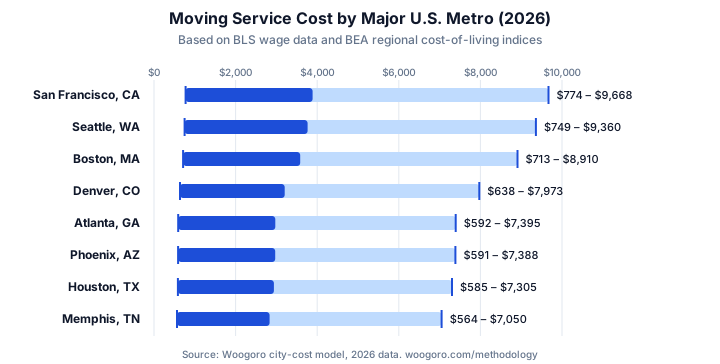
Long-distance moves are priced by weight and distance, but the per-pound rate quietly bakes in the local labor cost of loading at the origin metro and the carrier's warehouse and truck overhead. That makes the origin city the single biggest variable on an interstate quote — an identical 8,000-pound shipment can cost 50% more from New York than from Memphis even with the same destination. The ranges below cover a full-service, professionally packed interstate 3-bedroom move of roughly 1,000 miles — the most common consumer-relocation distance and the lens that actually maps to the quotes most households are comparing. High-labor coastal metros and military PCS hubs both push the upper end. Click any city for hourly crew rates, local-move pricing by home size, and packing breakdowns.
| City (Origin) | Full-Service Interstate 3BR, ~1,000 mi | vs. National Median |
|---|---|---|
| Atlanta, GA | $5,200–$7,800 | at median |
| Austin, TX | $5,500–$8,200 | ~5% higher |
| Boston, MA | $7,000–$10,500 | ~35% higher |
| Charlotte, NC | $5,000–$7,500 | ~5% lower |
| Chicago, IL | $6,000–$9,000 | ~15% higher |
| Colorado Springs, CO | $5,200–$7,800 | at median |
| Dallas, TX | $5,200–$7,800 | at median |
| Denver, CO | $5,500–$8,200 | ~5% higher |
| Detroit, MI | $4,500–$6,800 | ~15% lower |
| Houston, TX | $5,200–$7,800 | at median |
| Indianapolis, IN | $4,800–$7,200 | ~10% lower |
| Jacksonville, FL | $5,200–$7,800 | at median |
| Las Vegas, NV | $5,500–$8,200 | ~5% higher |
| Los Angeles, CA | $7,000–$10,500 | ~35% higher |
| Memphis, TN | $4,500–$6,800 | ~15% lower |
| Miami, FL | $6,000–$9,000 | ~15% higher |
| Minneapolis, MN | $5,200–$7,800 | at median |
| Nashville, TN | $5,200–$7,800 | at median |
| New York, NY | $7,500–$11,500 | ~50% higher |
| Philadelphia, PA | $5,800–$8,500 | ~10% higher |
| Phoenix, AZ | $5,200–$7,800 | at median |
| Pittsburgh, PA | $4,800–$7,200 | ~10% lower |
| Portland, OR | $6,000–$8,800 | ~15% higher |
| Sacramento, CA | $5,800–$8,500 | ~10% higher |
| San Diego, CA | $6,500–$10,000 | ~30% higher |
| San Francisco, CA | $7,500–$11,500 | ~50% higher |
| Seattle, WA | $6,500–$9,500 | ~20% higher |
| Tampa, FL | $5,200–$7,800 | at median |
Cross-country moves over 2,500 miles typically run 25–40% above these ranges. Local moves under 50 miles are billed by the hour instead — see the hourly crew-rate table above. See moving cost data for all U.S. cities → or browse the full city directory across every cost vertical.
Got a Moving Quote? Let Us Check It.
Upload your moving estimate and get a free, instant analysis. We check every line item against market rates, flag missing disclosures, and identify potential scam indicators.
Upload Your Moving Quote for Free AnalysisFrequently Asked Questions
How much does a local move cost?
A local move (under 50 miles) costs $300 to $2,500 depending on home size and crew needed. A 2-bedroom home with a 3-man crew typically runs $600 to $1,200. Costs increase with stairs, long carries, and weekend or peak season scheduling.
How much does a cross-country move cost?
A cross-country move (2,000+ miles) costs $3,000 to $14,000 depending on home size. A 2-bedroom move from the East Coast to the West Coast typically runs $4,500 to $8,000. Costs are based on weight and distance, not hours.
Should I get a binding or non-binding estimate?
Always get a binding or binding-not-to-exceed estimate for long-distance moves. A non-binding estimate is just a guess, and the mover can charge you more on delivery day based on actual weight. With a binding estimate, the price is locked in. A binding-not-to-exceed estimate means you pay the quoted price or less if the actual weight is lower.
When is the cheapest time to move?
The cheapest time to move is mid-month, mid-week (Tuesday through Thursday), during the off-season (October through April). Moving on a Saturday in June or July can cost 20 to 30% more than the same move on a Wednesday in February. End-of-month and first-of-month dates are always more expensive due to lease turnover.
How do I verify a moving company is legitimate?
Look up their USDOT number at the FMCSA SAFER website (safer.fmcsa.dot.gov). Verify their operating authority is active and check their complaint and safety history. Also check Google reviews, BBB ratings, and ask for references. Any interstate mover must have a USDOT number by federal law.
Is moving insurance worth it?
Yes, if you own anything valuable. Basic liability coverage (included free by law) only pays 60 cents per pound per item. That means a 50-pound TV worth $1,500 would only be covered for $30. Full-value protection typically costs $100 to $500 depending on the declared value of your shipment, and covers repair, replacement, or cash settlement at current market value.
How far in advance should I book movers?
Book 4 to 6 weeks in advance for local moves and 6 to 8 weeks for long-distance moves. During peak season (May through September), book 8 to 12 weeks ahead. Last-minute bookings often come with higher rates and limited availability, especially on weekends.
What items will movers not move?
Most movers will not transport hazardous materials (propane tanks, gasoline, paint, chemicals), perishable food, plants (for long-distance moves), pets, firearms and ammunition, or important documents and valuables like jewelry. Plan to transport these items yourself.